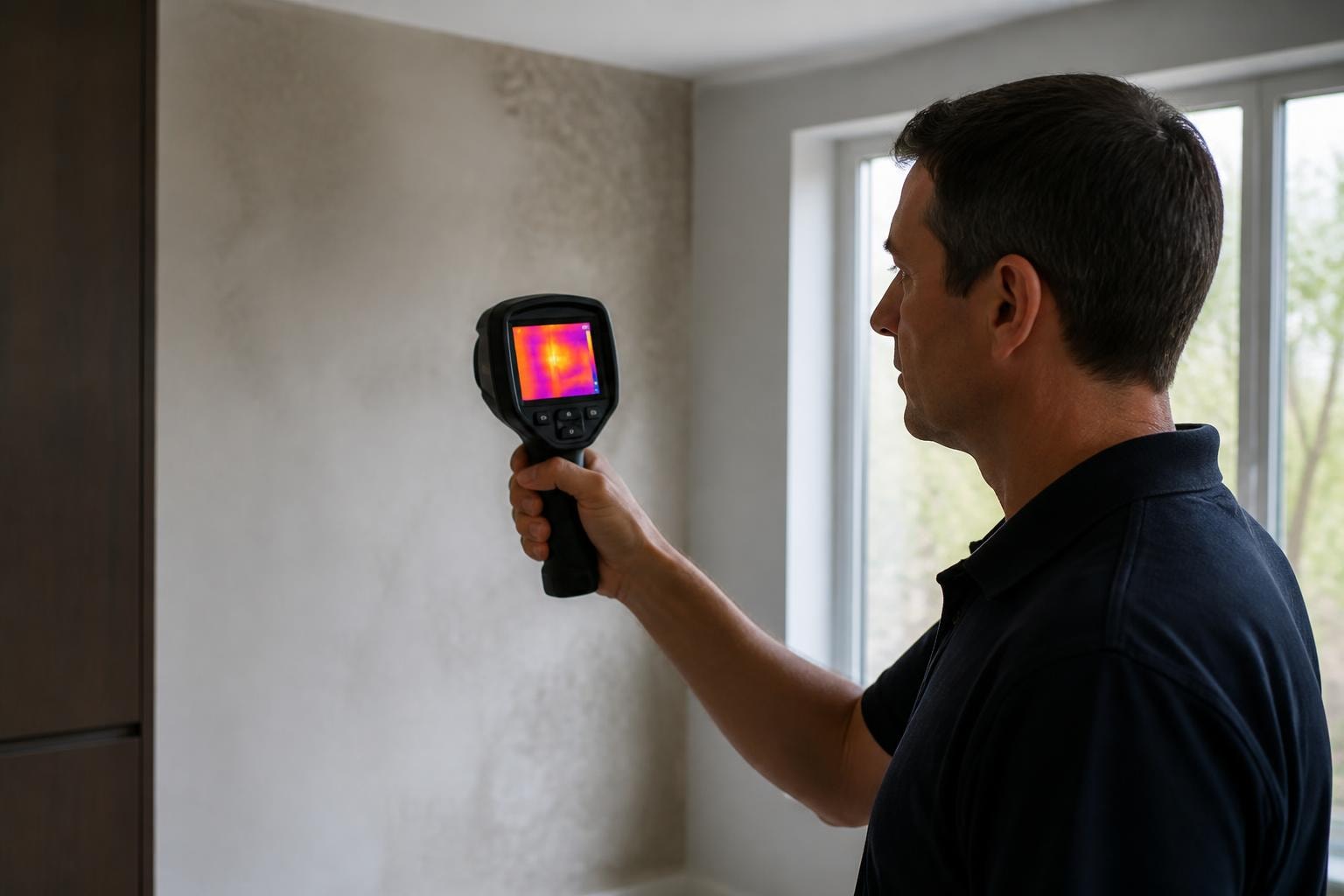
Property defects often remain invisible until they escalate into costly repairs. A thermal imaging survey transforms how we detect moisture ingress, insulation failures, and structural anomalies by capturing temperature variations across building surfaces. This non-invasive technology has become an essential diagnostic tool for property owners, surveyors, and maintenance professionals across the United Kingdom, particularly when investigating persistent damp issues or conducting energy efficiency assessments. Understanding the capabilities and applications of thermal imaging can help you make informed decisions about property maintenance and remediation strategies.
Understanding Thermal Imaging Technology
Thermal imaging cameras detect infrared radiation emitted by all objects based on their temperature. These specialized devices convert heat signatures into visual representations, displaying temperature differences through colour-coded images called thermograms. The technology operates across a spectrum invisible to human eyes, revealing patterns that indicate moisture accumulation, air leakage, or insulation defects.
The fundamental principle relies on emissivity – the rate at which materials radiate heat. Different building materials emit thermal energy at varying rates, creating distinct patterns on thermal images. Wet materials typically appear cooler than dry surfaces because moisture evaporates and draws heat away, making damp areas clearly visible on thermographic scans.
Modern thermal cameras used in building surveys typically feature temperature sensitivity of 0.1°C or better, ensuring precise detection of subtle variations. This sensitivity proves crucial when identifying early-stage moisture problems before visible damage manifests.
Key Components of Thermal Survey Equipment
- Infrared detector: Captures thermal radiation and converts it into electronic signals
- Lens system: Focuses infrared energy onto the detector array
- Display screen: Shows real-time thermal images with temperature measurements
- Recording capability: Stores images and data for analysis and reporting
- Temperature measurement tools: Provide spot measurements and thermal gradients
The Royal Institution of Chartered Surveyors (RICS) emphasizes how thermal imaging surveys have revolutionized building inspections by providing objective, quantifiable data about building performance and defects.
Applications in Building Diagnostics
A thermal imaging survey serves multiple diagnostic purposes across residential, commercial, and industrial properties. Property surveyors and building inspectors increasingly rely on this technology to provide comprehensive assessments that traditional visual inspections cannot achieve.
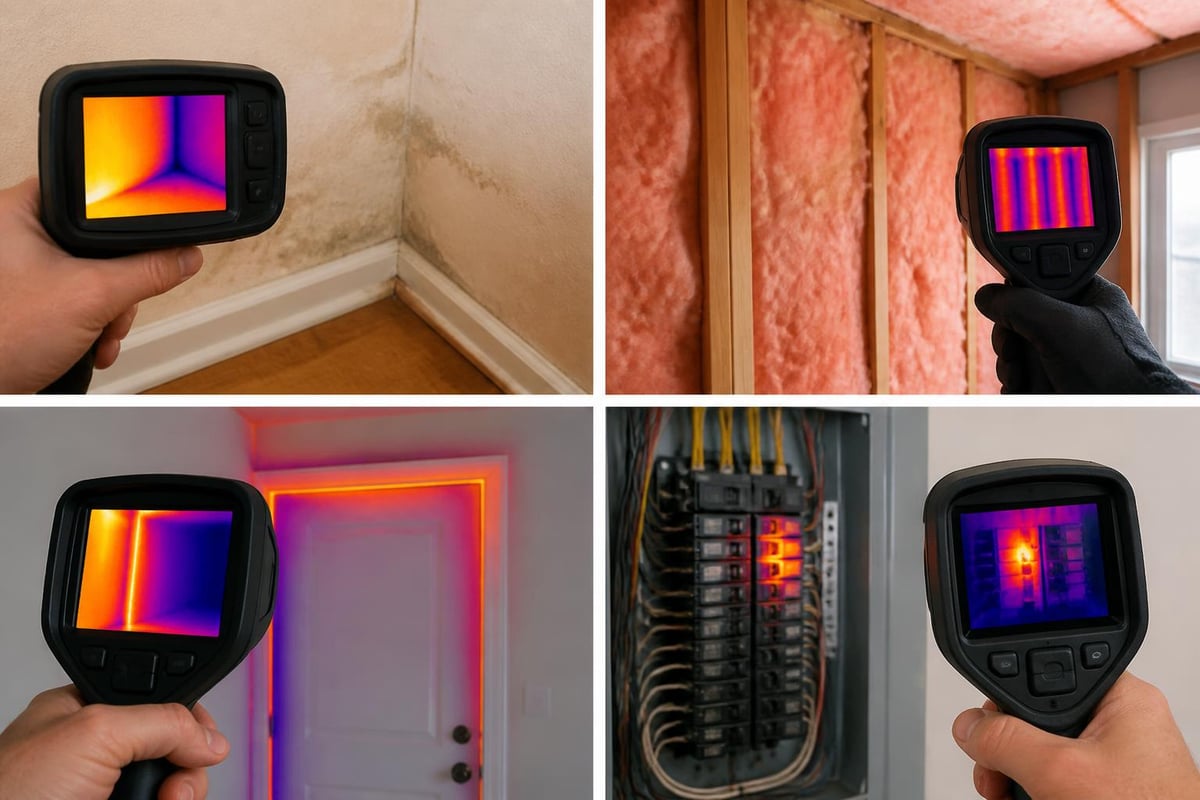
Moisture detection represents one of the most valuable applications. Water ingress from leaking pipes, roof damage, or rising damp creates temperature differentials easily captured by thermal cameras. Early detection prevents extensive damage to structural elements and interior finishes whilst reducing remediation costs.
Common Survey Applications
| Application | Purpose | Benefit |
|---|---|---|
| Moisture mapping | Locate hidden water ingress | Prevents structural damage |
| Insulation assessment | Identify thermal bridges and gaps | Reduces energy costs |
| Air leakage detection | Find draught sources | Improves comfort and efficiency |
| Roof inspections | Detect trapped moisture in flat roofs | Extends roof lifespan |
| Electrical surveys | Identify overheating components | Prevents fire hazards |
Energy efficiency assessments benefit significantly from thermal imaging surveys. Heat loss through poorly insulated walls, roofs, or windows becomes immediately apparent, allowing property owners to prioritize improvement works effectively. This application has gained prominence as energy costs continue rising and environmental regulations tighten.
When combined with Mould Assessment, thermal imaging provides comprehensive diagnostic information about moisture problems that contribute to mould growth, helping specialists identify hidden sources of dampness that fuel microbial activity.
Survey Standards and Methodology
Professional thermal imaging surveys in the UK must adhere to established standards ensuring accuracy and reliability. The NHBC Foundation provides detailed guidance on conducting thermal imaging surveys, covering preparation, execution, and reporting requirements that maintain industry standards.
BS EN 13187:1999 specifically addresses thermal performance of buildings, outlining qualitative detection of thermal irregularities through infrared methods. This standard defines environmental conditions, equipment specifications, and reporting requirements for building envelope assessments.
Survey Preparation Requirements
Successful thermal imaging surveys require careful preparation to ensure accurate results. Temperature differentials of at least 10°C between internal and external environments typically prove necessary for effective surveys. Winter months often provide ideal conditions when heating systems create substantial temperature differences.
- Stabilize internal temperatures for minimum 12 hours before survey
- Ensure heating systems operate normally during assessment period
- Close windows and external doors to minimize air movement
- Remove furniture or storage items blocking wall access
- Schedule surveys during appropriate weather conditions
The surveyor must also consider reflected temperature sources that might create false readings. Windows, radiators, and electrical equipment can influence thermal readings if not properly accounted for during image capture and interpretation.
Interpreting Thermal Images
Reading thermograms requires training and experience to distinguish genuine defects from normal temperature variations. Colour palettes on thermal images typically range from blue (cooler) through green and yellow to red (warmer), though these assignments can be customized.
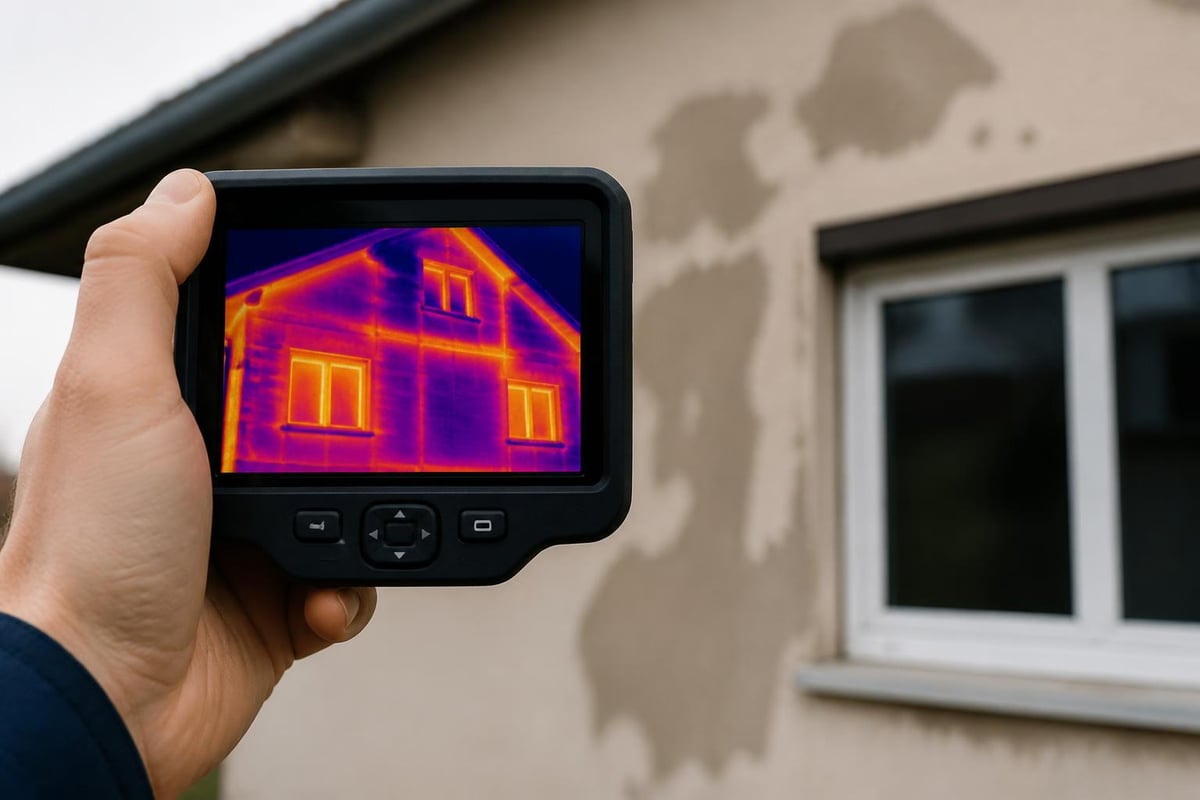
Pattern recognition forms the cornerstone of effective interpretation. Moisture typically creates irregular, organic shapes with gradual temperature transitions. Insulation gaps often appear as linear patterns or geometric shapes corresponding to structural framing. Air leakage presents as streaks or concentrated cool spots near building junctions.
Common Thermal Patterns
- Thermal bridging: Cool linear patterns following structural elements
- Missing insulation: Large uniform cool areas in walls or ceilings
- Water ingress: Irregular cool patches with defined edges
- Air infiltration: Streaking patterns near joints and penetrations
- Condensation risk: Cool surface temperatures below dew point
False positives can occur when external factors influence surface temperatures. Recent rainfall, direct sunlight, or proximity to heat sources require careful consideration. Experienced thermographers cross-reference thermal images with visual inspections and moisture meter readings to confirm findings.
According to research from Aalborg University, thermal camera technology continues advancing with improved resolution and sensitivity, enabling more precise detection of building anomalies across diverse applications.
Benefits for Property Maintenance
The non-destructive nature of a thermal imaging survey represents perhaps its greatest advantage. Unlike invasive investigation methods requiring drilling or removal of finishes, thermal imaging assesses building conditions without causing any damage. This characteristic proves particularly valuable in occupied properties or heritage buildings where preservation matters.
Time efficiency distinguishes thermal surveys from traditional diagnostic approaches. A comprehensive thermal scan of a typical residential property can be completed within hours, compared to days required for invasive moisture surveys. This efficiency translates into reduced disruption and lower overall costs.
Preventive Maintenance Advantages
| Traditional Methods | Thermal Imaging Survey |
|---|---|
| Requires invasive testing | Completely non-destructive |
| Limited coverage area | Entire building envelope scanned |
| Reactive approach | Identifies problems early |
| Visual evidence limited | Comprehensive photographic documentation |
| Higher long-term costs | Prevents expensive repairs |
Documentation quality improves significantly with thermal imaging. Thermograms provide visual evidence of defects that clients, insurers, and contractors can easily understand. This clarity facilitates decision-making and supports insurance claims when necessary.
The technology also proves invaluable for monitoring remediation effectiveness. Follow-up thermal imaging surveys conducted after repair work confirm that moisture problems have been properly addressed, providing peace of mind and quality assurance.
Limitations and Considerations
Despite its capabilities, thermal imaging cannot detect all building defects. The technology reveals surface temperature patterns but cannot see through solid materials or determine the exact moisture content. Subsurface defects may remain undetected if they do not create sufficient surface temperature changes.
Environmental conditions significantly impact survey accuracy. High humidity, wind, or recent rainfall can affect surface temperatures and complicate interpretation. Surveyors must account for these variables when scheduling surveys and analyzing results.
Technical Limitations
Thermal imaging works optimally on accessible surfaces with clear lines of sight. Furniture, stored items, or architectural features blocking camera views prevent complete assessment. Reflective surfaces like mirrors or polished tiles can also create misleading thermal patterns requiring careful interpretation.
The technology identifies problem areas but rarely reveals root causes independently. A thermal imaging survey showing moisture accumulation indicates where water collects, but determining whether it stems from condensation, penetrating damp, or rising damp typically requires additional investigation.
Operator qualification matters considerably. BREEAM thermographic survey standards emphasize the necessity of using certified thermographers who understand building physics and can accurately interpret thermal data within appropriate contexts.
Choosing Survey Providers
Selecting qualified professionals ensures reliable survey results and accurate problem diagnosis. Look for thermographers holding certifications from recognized bodies such as the British Institute of Non-Destructive Testing (BINDT) or equivalent international standards like ITC Level 2 certification.
Experience with building pathology distinguishes competent surveyors from mere camera operators. Understanding how buildings perform, common defect patterns, and moisture behaviour allows proper interpretation of thermal data. Request sample reports demonstrating clear analysis and actionable recommendations.
Selection Criteria
- Professional certifications in thermography
- Relevant insurance coverage and professional indemnity
- Modern, calibrated thermal imaging equipment
- Comprehensive reporting with annotated thermal images
- Knowledge of building regulations and industry standards
Ask about the equipment specifications used for surveys. Higher resolution cameras with better thermal sensitivity provide more detailed information, particularly important for detecting subtle defects or surveying properties with complex construction.
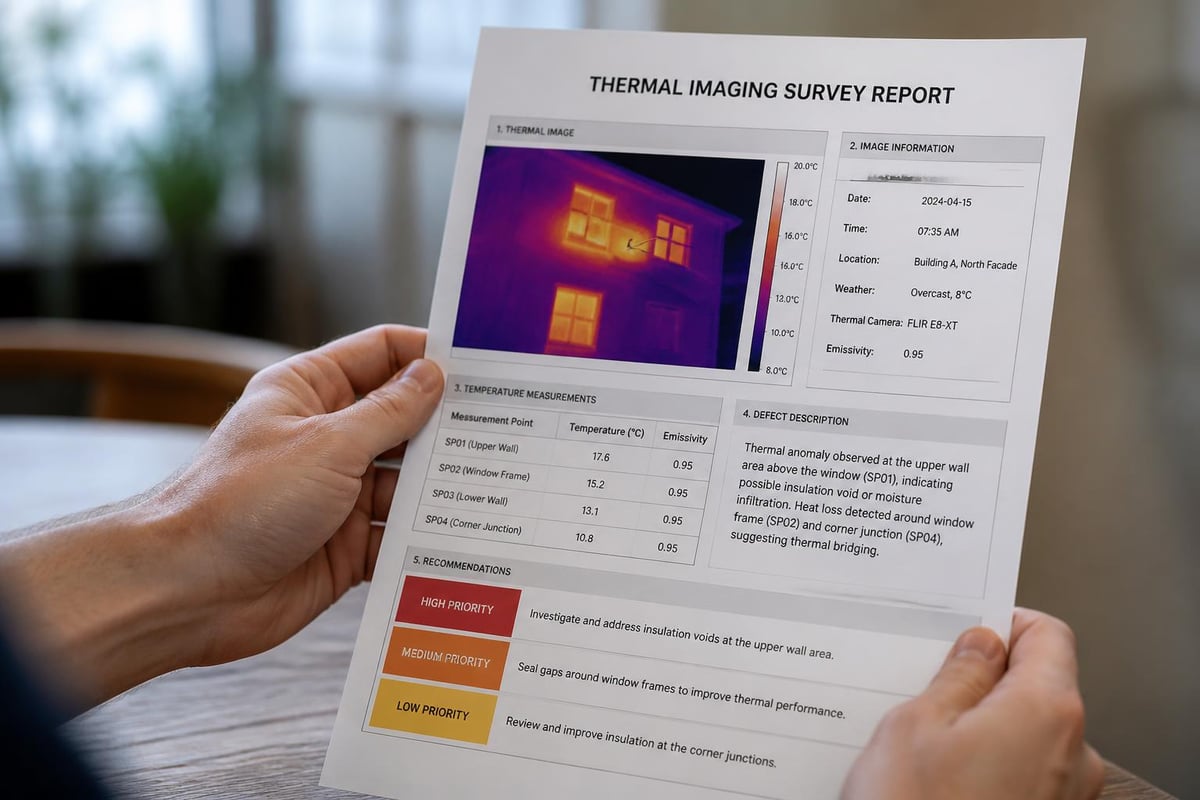
The survey report should include both thermal images and regular photographs for context, along with clear explanations of findings and recommended actions. Vague or incomplete reports provide limited value for remediation planning.
Integration with Broader Assessments
A thermal imaging survey often forms part of comprehensive property investigations rather than standing alone. When investigating damp and mould issues, thermal imaging combines with visual inspections, moisture meter readings, and potentially air quality testing to build complete diagnostic pictures.
This integrated approach proves particularly effective for persistent moisture problems where multiple contributing factors may exist. Thermal imaging quickly identifies cool areas suggesting dampness, which can then be confirmed and quantified using calibration-grade moisture meters.
For properties experiencing mould growth, thermal surveys help identify hidden moisture sources feeding the problem. Surface mould represents only the visible symptom; thermal imaging reveals underlying causes such as thermal bridging creating condensation or concealed water ingress from building defects. Professional remediation services, such as those detailed in comprehensive remediation approaches, benefit from thermal imaging data when planning moisture control strategies.
Multi-Method Diagnostic Approach
- Visual inspection: Identifies obvious defects and damage patterns
- Thermal imaging: Maps temperature variations indicating hidden problems
- Moisture meters: Quantifies moisture content in building materials
- Air quality testing: Measures spore levels and indoor pollutants
- Ventilation assessment: Evaluates air movement and humidity control
The use of UAV-mounted thermal imaging systems has expanded survey capabilities for large buildings or difficult-to-access areas like high roofs, enabling comprehensive assessments without scaffolding or expensive access equipment.
Cost-Benefit Analysis
Investment in a thermal imaging survey typically ranges from £300 to £800 for residential properties, depending on size and complexity. Commercial buildings command higher fees reflecting their scale and technical requirements. This upfront cost often prevents significantly larger expenditures on unnecessary or misdirected repairs.
Early problem detection represents the primary financial benefit. Identifying moisture ingress before it causes extensive timber decay, plaster damage, or mould colonization can save thousands in remediation costs. Insurance claims sometimes cover thermal surveys when investigating suspected defects or water damage.
Return on Investment Scenarios
| Problem Type | Detection Cost | Potential Savings |
|---|---|---|
| Roof leak | £400-600 survey | £3,000-8,000 structural repairs |
| Missing insulation | £300-500 survey | £400-800 annual energy savings |
| Hidden pipe leak | £350-550 survey | £5,000-15,000 damage prevention |
| Condensation issues | £300-450 survey | £2,000-6,000 mould remediation |
Energy efficiency improvements identified through thermal imaging surveys often qualify for various grant schemes or green financing options, offsetting survey costs through available incentives. The government's ongoing commitment to improving building energy performance makes thermal surveys increasingly relevant for compliance and improvement planning.
For property transactions, thermal imaging surveys provide buyers with confidence about building condition and help vendors demonstrate property quality. This transparency can facilitate negotiations and prevent post-purchase disputes over hidden defects.
Future Developments
Thermal imaging technology continues evolving with improved resolution, sensitivity, and analytical capabilities. Modern cameras now feature integrated moisture algorithms that automatically highlight areas likely containing elevated moisture content, streamlining survey processes.
Artificial intelligence applications are emerging to assist with image interpretation, identifying common defect patterns and flagging anomalies requiring expert attention. These developments promise to enhance consistency and reduce the expertise barrier for basic surveys whilst allowing specialists to focus on complex diagnostic challenges.
Cloud-based reporting platforms increasingly enable real-time data sharing between surveyors, clients, and contractors. This connectivity improves communication and allows immediate remedial action planning based on survey findings, reducing the time between detection and resolution.
The integration of thermal imaging with other technologies such as 3D laser scanning and moisture mapping software creates comprehensive digital building models. These models support ongoing maintenance planning and provide baseline data for monitoring building performance over time.
According to research into thermal imaging applications, the technology's role continues expanding across diverse sectors, with building diagnostics representing just one application among many benefiting from continuous technological advancement.
Thermal imaging surveys provide property owners with powerful diagnostic capabilities for detecting hidden moisture, insulation defects, and structural anomalies before they escalate into expensive problems. The technology's non-invasive nature, combined with its ability to visualize invisible building conditions, makes it an invaluable tool for maintaining property health and performance. Whether you're investigating suspected damp issues, planning energy improvements, or conducting pre-purchase inspections across Essex, London, or Kent, Mouldsurv Ltd combines advanced thermal imaging technology with expert analysis to deliver comprehensive property diagnostics and remediation solutions that address the root causes of moisture and mould problems.