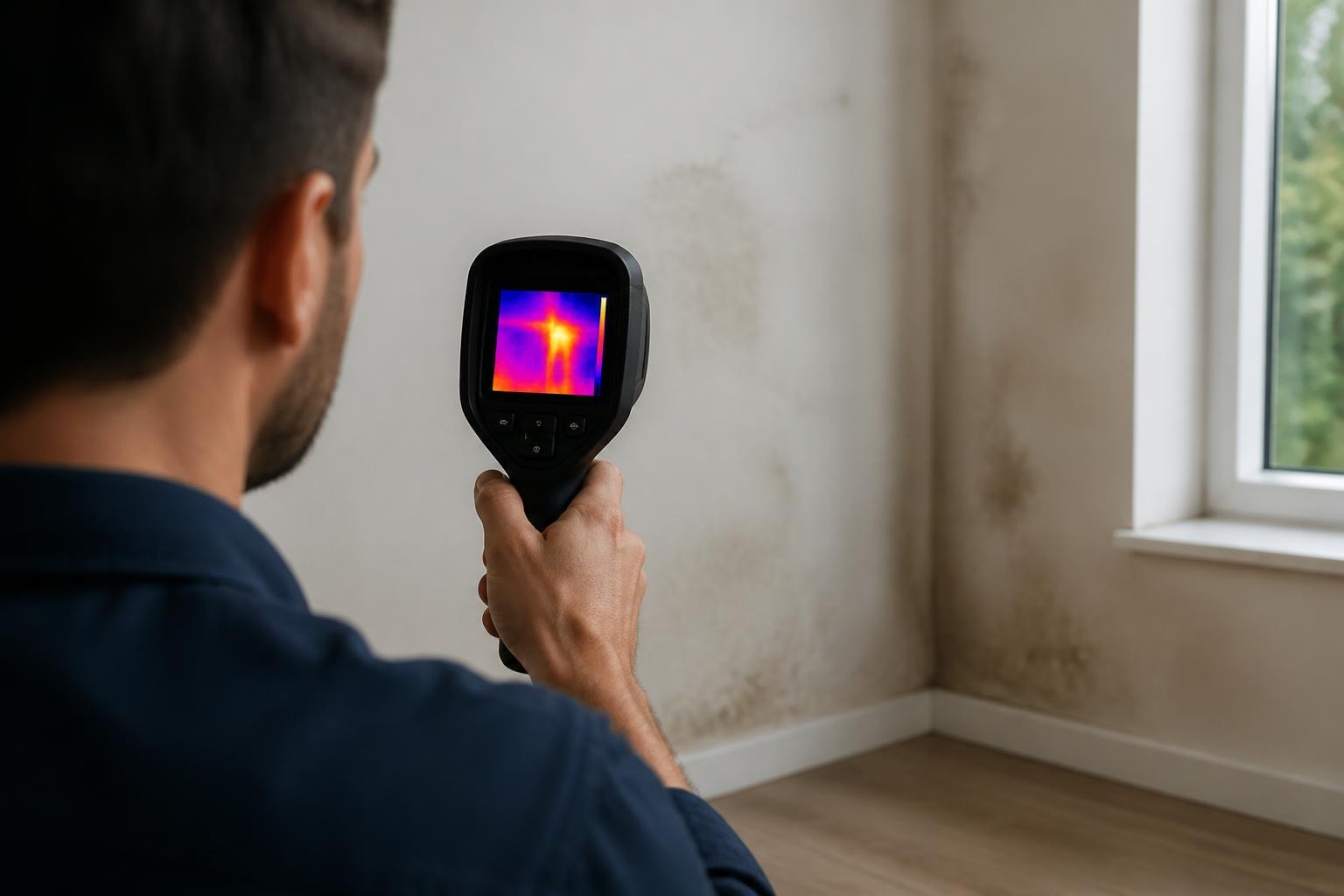
Property owners and facilities managers increasingly face challenges with mould infestations that remain hidden from visual inspection. Traditional detection methods often fail to identify problems until visible damage appears, resulting in costly repairs and potential health concerns. Thermal imaging mould detection offers a non-invasive, technologically advanced solution that reveals moisture patterns and temperature anomalies indicative of mould growth before it becomes visible. This diagnostic approach has transformed how professionals identify, assess, and address mould-related issues in residential and commercial properties throughout the United Kingdom.
Understanding Thermal Imaging Technology for Mould Detection
Thermal imaging cameras detect infrared radiation emitted by objects and surfaces, translating these emissions into visual representations of temperature variations. When moisture accumulates within building materials, it creates distinct thermal signatures that differ from surrounding dry areas. These temperature differentials occur because water-saturated materials conduct heat differently than their dry counterparts, creating detectable patterns even when hidden behind walls, ceilings, or flooring.
The science behind thermal imaging and mold detection relies on understanding how moisture affects thermal conductivity. Damp areas typically appear cooler than dry surfaces due to evaporative cooling effects. During inspections, professionals use calibrated thermal imaging equipment to identify these temperature variations, marking potential problem areas for further investigation.
Key Advantages of Non-Invasive Detection
- Preserves property integrity by eliminating the need for destructive testing
- Accelerates inspection processes through rapid scanning of large areas
- Identifies hidden moisture sources behind finished surfaces
- Documents findings visually with thermal images for insurance and remediation purposes
- Reduces investigation costs compared to traditional methods requiring extensive exploratory work
Professional thermal imaging mould assessments provide property owners with comprehensive documentation of moisture intrusion points. These detailed reports guide targeted remediation efforts, ensuring resources focus on actual problem areas rather than speculative locations.
Identifying Moisture Patterns Through Temperature Analysis
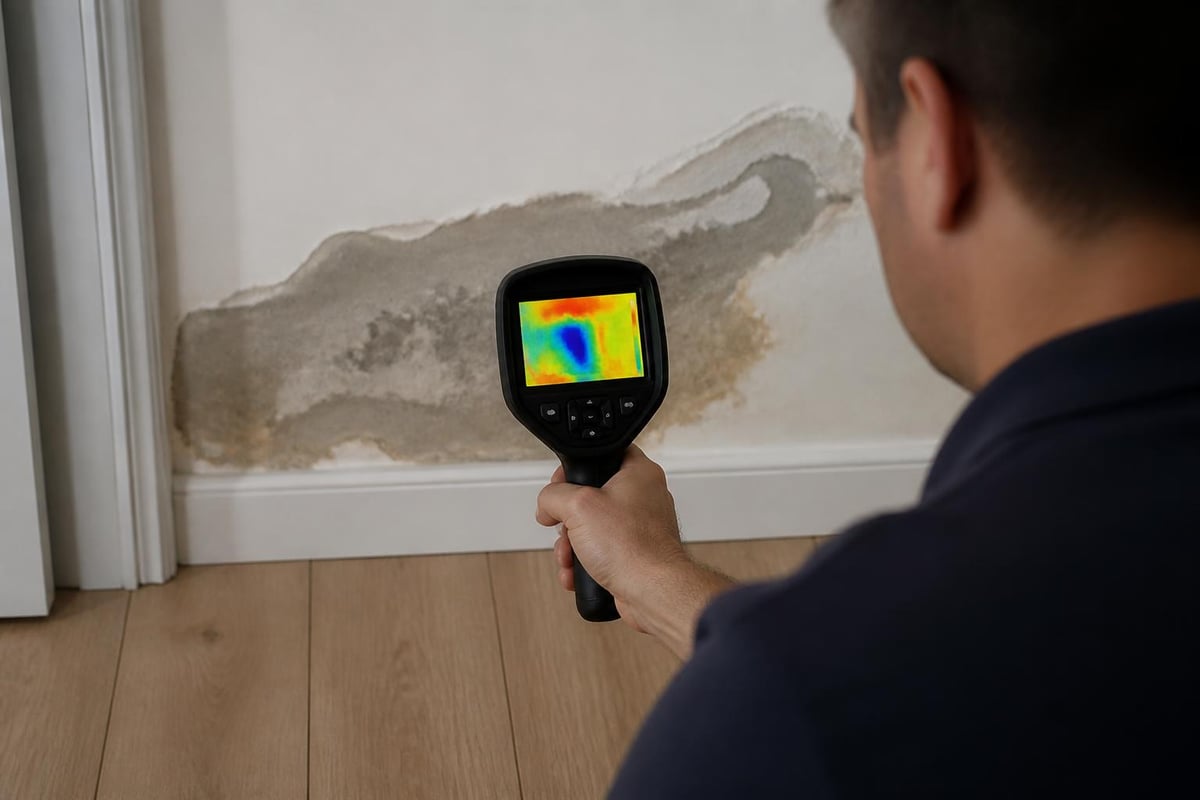
Thermal imaging mould detection requires understanding typical moisture migration patterns within building structures. Water intrusion follows predictable pathways, moving through porous materials, accumulating at junctions, and creating distinctive thermal signatures. Skilled technicians interpret these patterns to determine the moisture source and extent of affected areas.
Common moisture signatures include vertical streaks indicating plumbing leaks, horizontal bands suggesting roof leaks, and irregular patterns around windows and doors where seal failures allow weather penetration. The technology proves particularly valuable in multi-storey buildings where leak sources may be several floors above visible damage.
| Moisture Source | Thermal Signature | Typical Locations |
|---|---|---|
| Roof leaks | Irregular cooling patterns | Ceilings, upper walls |
| Plumbing failures | Vertical thermal bands | Behind fixtures, along pipe runs |
| Condensation | Diffuse cooling zones | Cold walls, thermal bridges |
| Rising damp | Horizontal demarcation lines | Ground-floor walls, basements |
| Penetrating damp | Localised cold spots | External wall junctions, mortar joints |
Professional mould assessment services combine thermal imaging with moisture meters and other diagnostic tools to verify findings. This multi-faceted approach ensures accurate diagnosis before remediation begins.
Equipment Requirements and Technical Specifications
Modern thermal imaging mould detection relies on sophisticated equipment designed for building diagnostics. Professional-grade cameras offer resolution ranging from 160x120 pixels to 640x480 pixels or higher, with thermal sensitivity below 0.1°C enabling detection of subtle temperature differences. These specifications prove crucial when identifying early-stage moisture problems or tracking moisture through complex building assemblies.
The science behind mold detection with thermal imaging emphasizes the importance of proper calibration and environmental control during inspections. Ambient temperature, relative humidity, and surface emissivity all influence thermal readings, requiring experienced operators who understand compensation techniques and interpretation protocols.
Essential Equipment Features
Professional thermal imaging cameras for mould detection typically include:
- Temperature range capability spanning -20°C to +250°C for comprehensive building diagnostics
- Digital image storage allowing comparison between thermal and visual images
- Adjustable emissivity settings compensating for different surface materials
- Spot temperature measurement tools for precise temperature readings
- Multiple color palettes enhancing contrast in specific temperature ranges
- Data logging functions tracking environmental conditions during surveys
Complementary equipment includes contact moisture meters for verification, hygrometers measuring ambient conditions, and documentation tools capturing visual references alongside thermal data. This integrated approach ensures comprehensive assessment of moisture-related issues.
Optimal Inspection Conditions and Methodology
Successful thermal imaging mould detection depends on creating temperature differentials between affected and unaffected areas. Inspections conducted during inappropriate conditions may fail to reveal moisture problems, leading to false negative results. Professional surveyors carefully time inspections and prepare properties to maximize detection sensitivity.
Ideal inspection conditions include temperature differences of at least 10°C between interior and exterior environments. In cooler months, heated interior spaces contrast sharply with exterior walls affected by moisture intrusion. During warmer periods, air conditioning creates similar conditions, though less pronounced than winter heating.
Preparation steps for effective thermal imaging surveys:
- Maintain consistent heating or cooling for minimum 24 hours before inspection
- Remove furniture and coverings from walls and floors
- Ensure access to all areas including basements, lofts, and crawl spaces
- Document recent weather conditions and potential moisture events
- Identify all water sources, drainage systems, and ventilation equipment
Inspectors systematically scan all building surfaces, paying particular attention to areas prone to moisture problems. External corners, service penetrations, and areas below bathrooms or kitchens receive careful scrutiny during comprehensive surveys.
Interpreting Thermal Images and Identifying False Positives
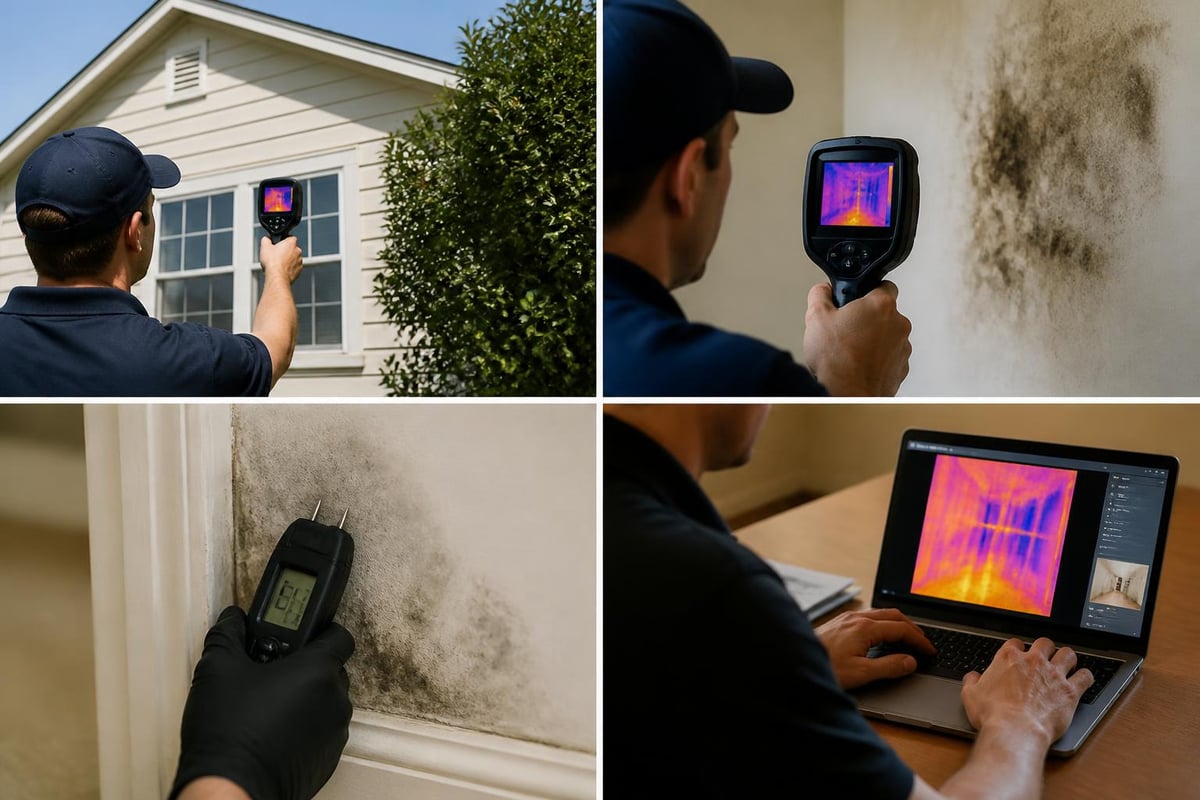
Thermal imaging mould detection requires expertise in distinguishing between moisture-related temperature variations and other thermal anomalies. Numerous building conditions create temperature differentials unrelated to moisture, potentially misleading inexperienced operators. Professional interpretation separates genuine moisture concerns from benign thermal patterns.
Common false positives include thermal bridges where structural elements conduct heat differently, air leakage creating localized cooling, and surface contamination affecting emissivity readings. Understanding thermal imaging applications helps professionals recognize these patterns and focus investigation efforts appropriately.
Verification Techniques
Thermal anomalies require confirmation through secondary testing methods:
- Invasive moisture meters measuring actual moisture content in suspect materials
- Visual inspection examining areas identified through thermal scanning
- Humidity measurements assessing environmental conditions supporting mould growth
- Material sampling when confirmed moisture requires mould species identification
- Follow-up imaging tracking changes after environmental condition adjustments
Professional standards require correlation between thermal findings and physical evidence before concluding moisture problems exist. This verification process prevents unnecessary remediation work and ensures resources target actual issues.
Integration with Comprehensive Mould Assessments
Thermal imaging mould detection forms one component of thorough property assessments. While thermal cameras excel at identifying moisture problems, comprehensive evaluations require additional diagnostic techniques addressing air quality, structural conditions, and environmental factors supporting mould growth.
Professional assessments typically begin with thermal scanning to identify potential problem areas, followed by targeted moisture testing, visual inspection of accessible spaces, and air sampling when appropriate. This layered approach provides complete understanding of mould conditions and underlying causes.
| Assessment Phase | Techniques Used | Information Gained |
|---|---|---|
| Initial screening | Thermal imaging, visual inspection | Problem area identification |
| Moisture verification | Contact meters, hygrometers | Actual moisture content, ambient conditions |
| Extent determination | Thermal mapping, probe testing | Affected area boundaries |
| Species identification | Surface sampling, air testing | Mould types, spore concentrations |
| Source analysis | Building fabric inspection | Root cause determination |
Understanding the complete moisture and mould situation enables effective remediation planning. Addressing symptoms without correcting underlying causes results in recurring problems and wasted resources.
Applications Across Different Property Types
Thermal imaging mould detection adapts to various property configurations and construction methods. Residential, commercial, and industrial buildings each present unique challenges requiring modified approaches and specialized knowledge of building systems and materials.
Residential properties benefit from thermal imaging mould surveys when:
- Musty odours persist without visible mould growth
- Historical water damage raises concerns about hidden moisture
- Property transactions require comprehensive condition assessments
- Occupants report unexplained health symptoms potentially linked to mould
- Recent renovations may have trapped moisture within building assemblies
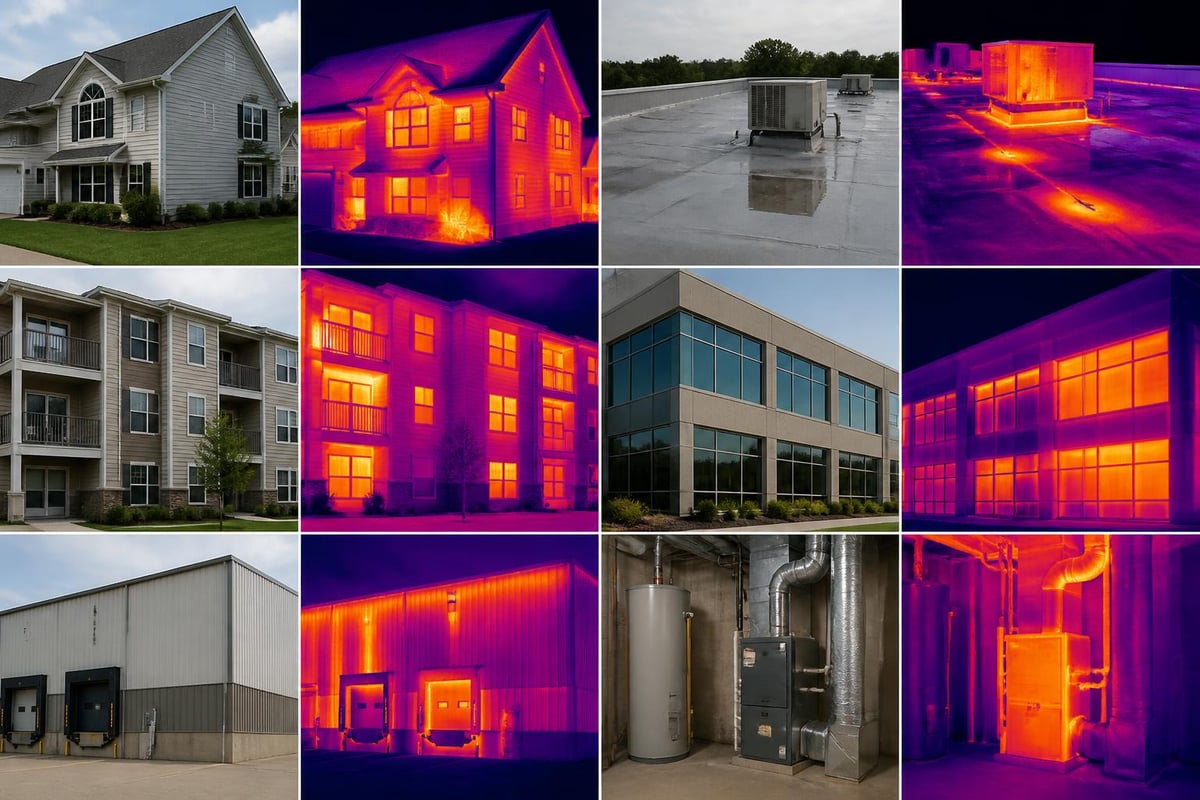
Commercial and industrial facilities face additional complexities including extensive mechanical systems, flat roofing assemblies, and large-scale HVAC installations that complicate moisture detection. Thermal imaging proves invaluable in these environments, rapidly scanning vast areas and identifying problems before they escalate into operational disruptions.
Regulatory Compliance and Professional Standards
Professional thermal imaging mould detection in the United Kingdom operates within established regulatory frameworks and industry standards. These guidelines ensure consistent service quality, appropriate equipment use, and reliable reporting that supports property management decisions and remediation planning.
Competent thermal imaging surveyors maintain certification through recognized professional bodies, demonstrating proficiency in thermography principles, building science, and moisture assessment techniques. Regular equipment calibration and continuing professional development ensure surveyors remain current with technological advances and methodological improvements.
Documentation standards require comprehensive reporting including thermal images, temperature data, moisture readings, and clear interpretation of findings. These reports support insurance claims, litigation proceedings, and remediation contractor selection when moisture problems require professional intervention. Mouldsurv Ltd maintains full compliance with UK legislation whilst delivering thermal imaging assessments throughout Essex, London, and Kent.
Cost-Benefit Analysis of Thermal Imaging Surveys
Property owners considering thermal imaging mould detection often weigh costs against potential benefits. Initial survey expenses typically range from several hundred to over a thousand pounds depending on property size, complexity, and assessment scope. These costs prove modest compared to expenses associated with undetected moisture damage and mould remediation.
Early detection through thermal imaging prevents progressive deterioration of building materials, structural components, and decorative finishes. Hidden moisture problems compound over time, causing increasingly severe damage that requires extensive repairs. Identifying issues at early stages when intervention remains straightforward saves substantial money whilst preserving property value.
Financial Benefits
- Reduced investigation costs compared to exploratory demolition methods
- Targeted remediation planning eliminating wasteful speculative work
- Prevention of secondary damage through early moisture problem identification
- Insurance premium reductions when proactive moisture management demonstrates risk mitigation
- Property value protection maintaining marketability and structural integrity
Commercial property owners particularly benefit from thermal imaging's ability to minimize business disruption. Non-invasive surveys proceed without interrupting operations, whilst early problem detection prevents emergency situations requiring urgent, costly interventions.
Limitations and Complementary Diagnostic Methods
Despite significant advantages, thermal imaging mould detection has inherent limitations requiring understanding and accommodation through complementary assessment techniques. Thermal cameras detect surface temperature variations but cannot see through solid materials or directly measure moisture content. Reflective surfaces, certain building materials, and environmental conditions may impede accurate thermal assessment.
Professional surveyors acknowledge these constraints, employing thermal imaging as one tool within comprehensive diagnostic protocols. Contact moisture meters verify thermal findings, whilst borescope inspections examine concealed spaces, and air quality testing quantifies mould spore concentrations. This integrated methodology compensates for individual technique limitations whilst providing robust assessment data.
Situations requiring supplementary assessment methods:
- Metallic cladding or reflective surfaces preventing accurate thermal readings
- Recent weather events requiring time for thermal signatures to develop
- Complex building assemblies where moisture pathways prove difficult to trace
- Legal proceedings demanding quantitative moisture measurements
- Healthcare facilities or sensitive environments requiring air quality verification
Understanding when thermal imaging proves most effective and when alternative methods better serve diagnostic objectives demonstrates professional competence and ensures clients receive appropriate services for their specific situations.
Advanced Applications and Emerging Technologies
Thermal imaging mould detection continues evolving as equipment manufacturers develop enhanced capabilities and resolution. Modern cameras integrate visual and thermal sensors, overlay data in real-time, and employ sophisticated image processing algorithms that highlight subtle temperature variations. These advances improve detection sensitivity whilst reducing interpretation complexity.
Emerging technologies include artificial intelligence algorithms trained to recognize moisture patterns, drone-mounted thermal cameras accessing difficult building areas, and cloud-based reporting systems enabling real-time collaboration between surveyors, property managers, and remediation contractors. Professional thermal imaging services increasingly leverage these innovations, delivering enhanced value whilst maintaining rigorous assessment standards.
Future developments may include hyperspectral imaging combining thermal and spectral analysis, improved sensor sensitivity enabling ambient temperature surveys, and integration with building information modeling systems providing comprehensive facility documentation. Staying current with technological progress ensures professional surveyors continue delivering optimal diagnostic services.
Case Studies Demonstrating Detection Success
Real-world applications illustrate thermal imaging mould detection's practical value across diverse scenarios. A recent residential assessment in Essex revealed extensive moisture migration from a failed shower tray affecting adjoining rooms. Thermal imaging identified the moisture extent without invasive investigation, enabling targeted remediation that preserved original finishes whilst eliminating the moisture source.
Commercial property assessments demonstrate equal value. A London office building experienced persistent odours in certain zones without visible mould growth. Thermal imaging revealed moisture accumulation within external wall cavities due to failed cavity tray installation. Early detection prevented progressive damage whilst professional remediation addressed the underlying construction defect.
Industrial facilities benefit from thermal imaging's ability to assess large areas efficiently. A Kent warehouse inspection identified multiple roof leaks affecting inventory storage areas. Rapid thermal scanning pinpointed specific failure locations, enabling prioritized repairs that protected valuable stock whilst minimizing business disruption.
Training and Certification for Thermal Imaging Professionals
Competent thermal imaging mould detection requires specialized training extending beyond basic thermography principles. Professional development programs address building science, moisture dynamics, mould biology, and assessment methodology specific to property diagnostics. Certification through recognized bodies validates competency whilst demonstrating commitment to professional standards.
Training curricula typically include theoretical instruction covering heat transfer principles, building construction methods, and moisture behaviour in various materials. Practical components develop skills in equipment operation, image interpretation, and report preparation. Continuing education maintains currency with technological advances and emerging best practices.
Property owners benefit from engaging certified thermal imaging professionals who demonstrate verifiable qualifications and ongoing professional development. This expertise ensures accurate assessments, appropriate interpretation, and reliable reporting supporting informed decision-making regarding moisture problems and mould concerns.
Thermal imaging mould detection represents a powerful diagnostic tool when applied by qualified professionals using calibrated equipment and established methodologies. The technology's non-invasive nature, combined with its ability to reveal hidden moisture problems, makes it invaluable for property assessments across residential, commercial, and industrial sectors. Mouldsurv Ltd provides comprehensive thermal imaging assessments alongside complete mould and damp solutions throughout Essex, London, and Kent, ensuring properties remain healthy, structurally sound, and compliant with UK regulations. Contact our certified team today to schedule a professional thermal imaging survey and protect your property investment.