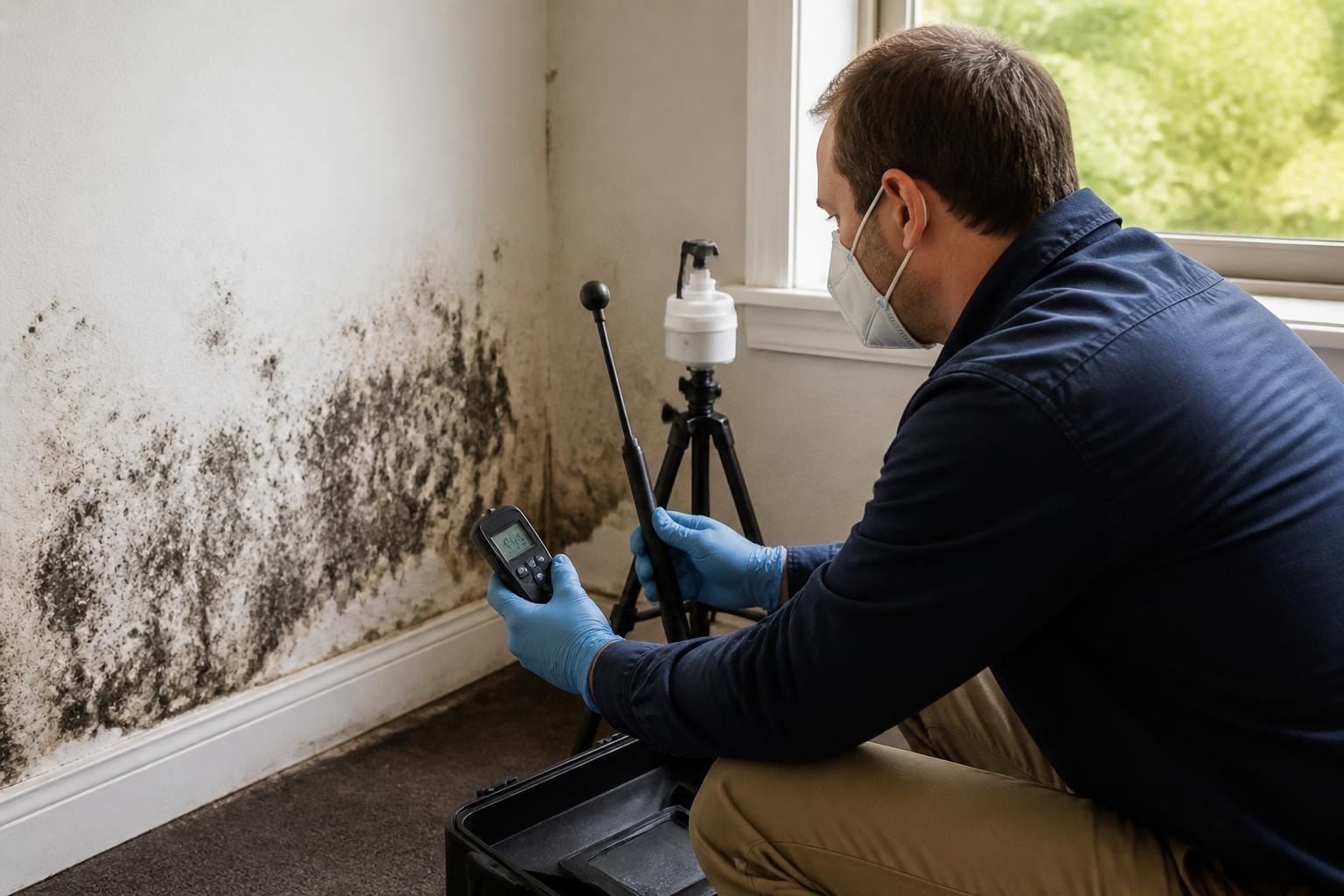
Mould growth in properties poses significant health risks and structural concerns that require professional assessment to address effectively. Understanding when and how to conduct mould testing enables property owners, landlords, and facility managers to make informed decisions about their indoor environment. Whether you suspect hidden mould growth, have experienced water damage, or simply want to ensure your property maintains healthy air quality, knowing the fundamentals of professional mould testing helps protect both occupants and property value.
Understanding Mould Testing Fundamentals
Mould testing encompasses various methodologies designed to identify, quantify, and analyse fungal growth within indoor environments. The CDC provides comprehensive information on mould health effects and the importance of proper assessment.
Professional testing goes beyond visual inspection to uncover hidden problems and determine the specific types of mould present. This scientific approach provides concrete data that guides remediation strategies and helps verify the effectiveness of cleanup efforts.
Types of Mould Testing Methods
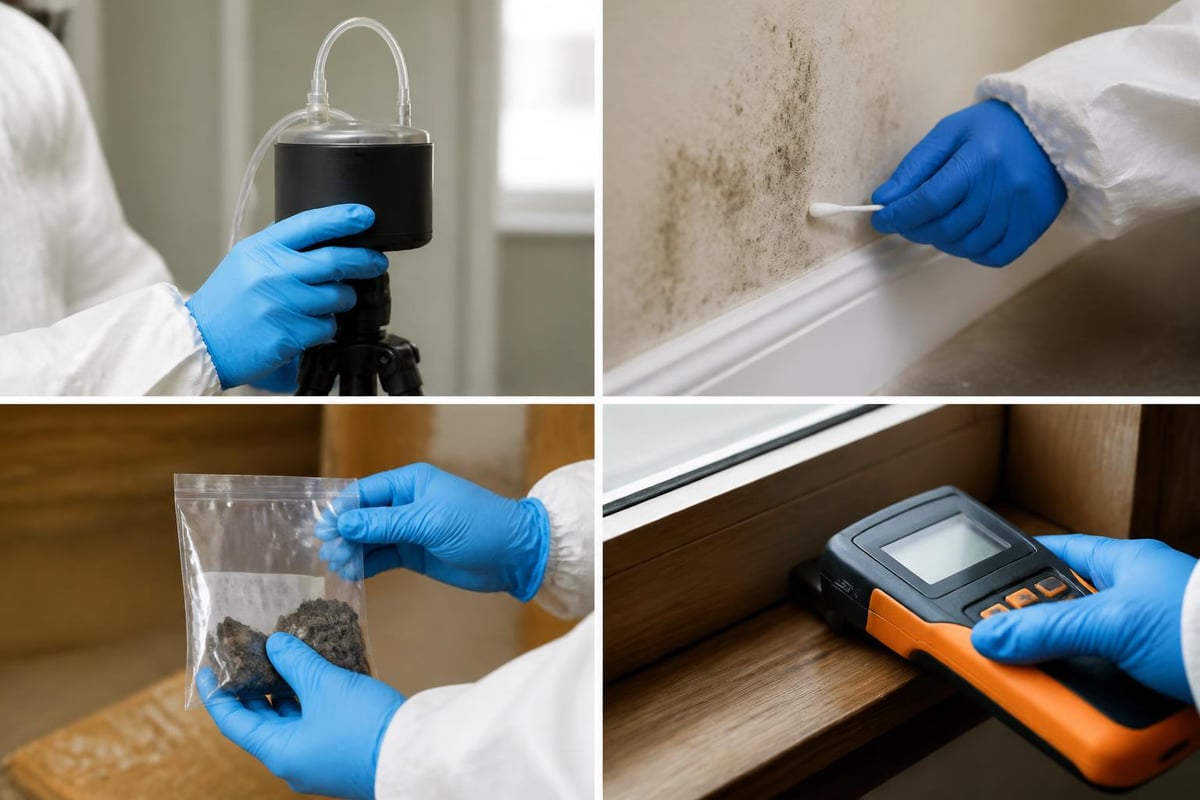
Different testing approaches serve distinct purposes in comprehensive mould assessment:
- Air sampling measures airborne spore concentrations throughout your property
- Surface sampling collects physical specimens from suspected growth areas
- Bulk sampling analyses materials containing visible mould colonies
- Moisture mapping identifies conditions conducive to fungal growth
Each method offers unique insights into your property's mould situation. Air sampling reveals what occupants breathe daily, whilst surface testing identifies specific species growing on walls, ceilings, or other materials.
When Mould Testing Becomes Necessary
Determining whether your property requires professional mould testing depends on several factors. The EPA discusses testing appropriateness and emphasizes that visible mould always requires remediation regardless of testing results.
Clear Indicators for Professional Assessment
Certain situations warrant immediate professional mould testing:
- Unexplained health symptoms that improve when occupants leave the property
- Recent water damage from flooding, leaks, or condensation issues
- Musty odours without visible mould sources
- Property transactions requiring documentation of indoor air quality
- Post-remediation verification to confirm successful mould removal
Health symptoms frequently associated with mould exposure include respiratory issues, persistent coughing, skin irritation, and headaches. When multiple occupants experience similar symptoms that coincide with time spent in specific areas, professional testing provides crucial answers.
| Scenario | Testing Priority | Recommended Approach |
|---|---|---|
| Visible mould growth | Low | Direct remediation |
| Hidden mould suspected | High | Air and moisture testing |
| Post-water damage | High | Comprehensive assessment |
| Health complaints | Medium-High | Air quality analysis |
| Pre-purchase survey | Medium | Visual plus selective sampling |
Water damage events create ideal conditions for rapid mould development. Even when surfaces appear dry, moisture trapped within wall cavities, beneath flooring, or inside building materials can sustain extensive hidden growth.
Professional Testing Procedures and Standards
Qualified mould testing professionals follow established protocols to ensure accurate, reliable results. NIOSH outlines testing and remediation strategies that emphasize proper sampling techniques and laboratory analysis.
The Comprehensive Testing Process
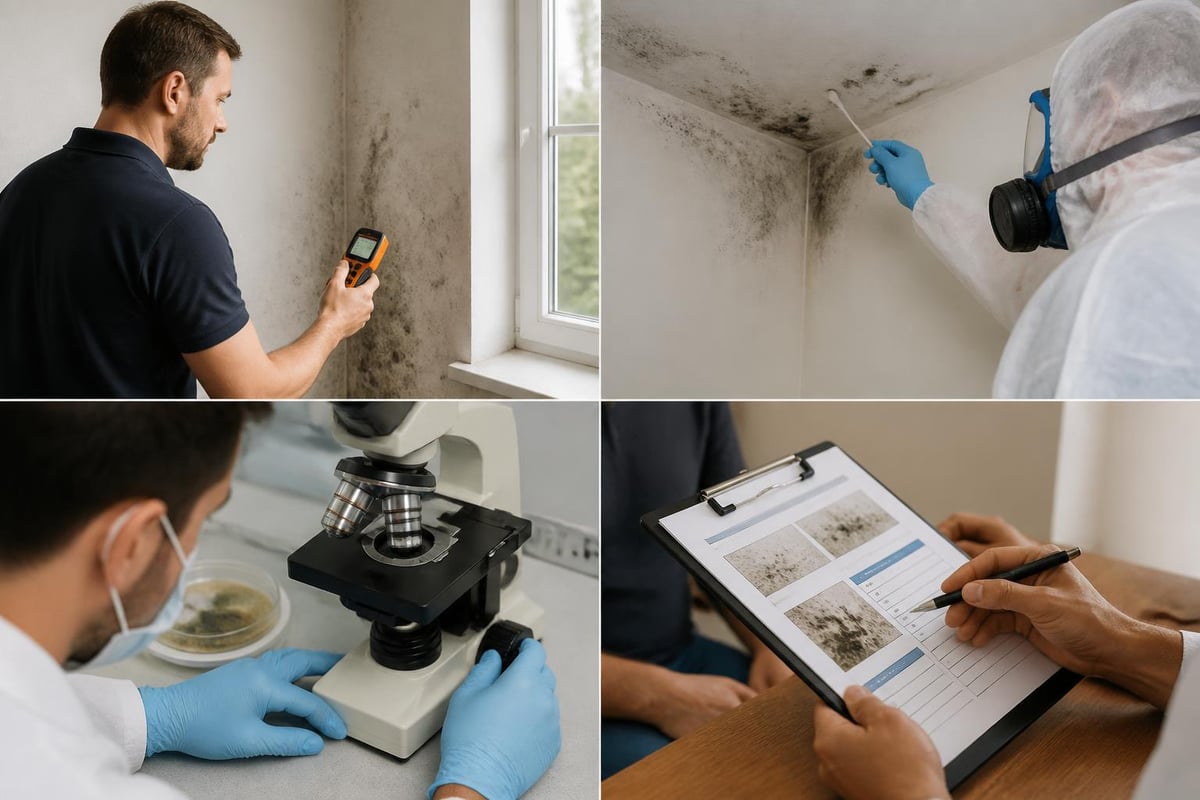
Professional mould assessments typically unfold in systematic stages:
Initial consultation establishes property history, occupant concerns, and previous water damage. Assessors gather information about HVAC systems, ventilation patterns, and any visible problems.
Visual inspection examines all accessible areas using specialised equipment including moisture meters, thermal imaging cameras, and borescopes for cavity investigation. This non-invasive examination identifies problem areas requiring further analysis.
Sample collection employs sterile equipment and proper techniques to gather representative specimens. Air samples capture spore concentrations at multiple locations and heights, whilst surface samples target suspicious growth areas.
Laboratory analysis by accredited facilities identifies mould species, quantifies spore counts, and compares indoor readings against outdoor baseline samples or established standards.
Understanding Test Results
Laboratory reports provide detailed information requiring professional interpretation:
- Spore concentration measurements (spores per cubic metre)
- Species identification including potentially toxic varieties
- Comparison between indoor and outdoor samples
- Assessment of water damage indicators
- Recommendations for remediation priorities
Results showing indoor spore levels significantly exceeding outdoor concentrations indicate active indoor mould sources. Certain species, particularly those producing mycotoxins, warrant immediate attention regardless of concentration levels.
Selecting Qualified Testing Professionals
Choosing competent mould testing specialists ensures accurate assessment and appropriate recommendations. The EPA provides guidance on selecting qualified professionals for testing and remediation services.
Essential Professional Qualifications
Reputable mould testing companies demonstrate specific credentials and expertise:
- Industry certifications from recognised bodies including RICS, CSRT, or IICRC
- Proper insurance covering professional indemnity and public liability
- Accredited laboratories for sample analysis with UKAS or equivalent certification
- Transparent pricing with clear explanations of services included
- Independence from remediation services to avoid conflicts of interest
Experience matters significantly in mould assessment. Professionals who regularly conduct testing across various property types develop keen observation skills and understanding of common mould patterns specific to UK building construction and climate conditions.
Questions to Ask Potential Testing Companies
Before engaging a mould testing service, property owners should confirm:
- What specific testing methods will be employed?
- How many samples will be collected and from which locations?
- Which laboratory will analyse samples and what are their accreditations?
- What turnaround time should be expected for results?
- Will the report include detailed remediation recommendations?
- Does the company perform remediation, creating potential conflicts of interest?
Transparent professionals readily answer these questions and explain their methodology in accessible language. Those who are evasive about procedures or pressure immediate remediation contracts may not prioritize your best interests.
Mould Testing Costs and Value Considerations
Investment in professional mould testing varies based on property size, testing scope, and methodologies employed. NC State Extension explains circumstances requiring testing and helps property owners make cost-effective decisions.
Understanding the financial aspects helps property owners budget appropriately whilst recognising the value professional assessment provides.
Typical Cost Ranges in 2026
UK mould testing services generally fall within these price brackets:
| Service Type | Typical Cost Range | What's Included |
|---|---|---|
| Basic air sampling | £200-£400 | 2-3 air samples, laboratory analysis |
| Comprehensive assessment | £400-£800 | Multiple samples, moisture mapping, detailed report |
| Post-remediation verification | £150-£300 | Targeted sampling, clearance documentation |
| Commercial property testing | £600-£1,500+ | Extensive sampling, compliance documentation |
These figures represent general guidance, with actual costs depending on property characteristics, access challenges, and specific testing requirements. Comprehensive Mould Assessment services typically include detailed reporting and remediation guidance alongside laboratory analysis.
Return on Testing Investment
Professional mould testing delivers measurable value beyond immediate results:
Health protection for occupants by identifying hidden hazards before symptoms develop or worsen. Early detection prevents chronic exposure to harmful spores.
Property preservation through timely identification of moisture problems that could cause structural damage if left unaddressed. Minor issues cost substantially less to correct than advanced deterioration.
Insurance documentation providing evidence for claims related to water damage or mould growth. Proper testing reports strengthen claims and expedite settlements.
Transaction confidence for property purchases or sales, offering buyers assurance and sellers documentation of property conditions.
The cost of professional testing represents a fraction of potential expenses from untreated mould problems, including extensive remediation, property damage repair, and health complications.
Common Mould Testing Misconceptions
Several myths about mould testing persist despite professional guidance clarifying best practices. Understanding these misconceptions helps property owners make informed decisions.
DIY Testing Kit Limitations
Consumer mould testing kits available at retail outlets offer limited value compared to professional assessment. Whilst these products can confirm mould presence, they provide no information about:
- Concentration levels or severity of contamination
- Specific mould species identification
- Comparison to outdoor baseline samples
- Hidden mould in wall cavities or other inaccessible areas
- Professional interpretation of results and remediation recommendations
The EPA addresses sampling necessity and notes that visible mould always requires removal regardless of species identification.
Testing Without Remediation Action
Some property owners invest in testing but fail to act on findings, negating the assessment's value. Testing serves as a diagnostic tool guiding effective remediation, not an end in itself.
Identifying mould species or spore concentrations matters only when results inform appropriate corrective actions. Professional testing should always lead to remediation planning based on findings.
The "Safe Level" Fallacy
No universally established "safe" mould level exists in indoor environments. Whilst comparing indoor and outdoor concentrations provides useful context, any significant indoor mould growth warrants attention.
Individual sensitivity to mould varies considerably. Concentrations causing no symptoms in some occupants may trigger severe reactions in others, particularly those with asthma, allergies, or compromised immune systems.
Integrating Testing with Broader Mould Management
Effective mould testing forms part of comprehensive property management rather than existing as an isolated activity. The EPA's guide on mould in residential settings discusses prevention strategies alongside testing and remediation.
Pre-Remediation Assessment Value
Testing before beginning remediation work establishes baseline conditions, identifies all affected areas, and guides containment strategies. This information prevents incomplete cleanup that allows mould to return rapidly.
Professionals use testing data to:
- Design appropriate containment barriers
- Select proper remediation techniques for specific mould types
- Determine necessary safety equipment and procedures
- Establish clearance criteria for verification testing
Without pre-remediation testing, cleanup efforts may address visible growth whilst missing hidden colonies that continue spreading.
Post-Remediation Verification Testing
Clearance testing following remediation confirms successful mould removal and validates that spore levels have returned to acceptable ranges. This critical step protects against premature reoccupation of affected spaces.
Verification testing should occur after:
- All remediation work completes
- Cleaned areas undergo thorough HEPA vacuuming
- Containment barriers remain in place
- Sufficient time passes for airborne spores to settle
Failed clearance tests indicate incomplete remediation requiring additional cleanup before areas return to normal use. For property owners and landlords, clearance documentation provides essential proof that proper remediation occurred, protecting against future liability.
Regional Considerations for UK Property Testing
British climate and construction methods create specific mould challenges requiring localised expertise. Properties across Essex, London, and Kent face particular vulnerability to moisture problems due to coastal proximity and varying building ages.
Climate-Related Testing Factors
UK weather patterns significantly influence mould growth:
- High humidity particularly during autumn and winter months
- Temperature fluctuations causing condensation on cold surfaces
- Limited ventilation in energy-efficient modern constructions
- Penetrating damp in older properties with solid wall construction
Professional testing in UK properties must account for these regional factors, examining areas particularly susceptible to British climate challenges including window reveals, external wall junctions, and roof spaces.
Regulatory Compliance Considerations
UK property owners face specific legal obligations regarding mould and damp issues:
Landlords must ensure rental properties remain free from health hazards under the Homes (Fitness for Human Habitation) Act 2018. Professional testing provides documentation of due diligence and problem identification.
Commercial property managers must comply with workplace health and safety regulations protecting employees and visitors from mould exposure hazards.
Social housing providers face additional scrutiny following recent legislative changes emphasizing tenant health protection. Comprehensive testing programmes demonstrate compliance commitment.
Testing documentation supports compliance with these regulations whilst protecting property owners from potential legal challenges. For those seeking comprehensive solutions, understanding the full spectrum from assessment through professional remediation ensures properties meet all regulatory requirements.
Moisture Control as Testing Context
Mould testing provides maximum value when conducted alongside comprehensive moisture assessment. Since mould cannot grow without adequate moisture, identifying water sources proves essential for preventing recurrence after remediation.
Moisture Testing Integration
Professional assessors employ multiple moisture detection methods:
- Surface moisture meters measuring materials including wood, plaster, and masonry
- Thermal imaging cameras revealing hidden moisture patterns and temperature differentials
- Relative humidity monitoring assessing ambient air moisture levels
- Hygrometers tracking moisture conditions over extended periods
This moisture data contextualises mould test results, revealing whether current growth represents active colonies or dormant spores from previous moisture events. Active moisture issues require immediate attention alongside any mould remediation.
Common UK Moisture Sources
British properties experience mould problems from various moisture origins:
- Condensation from inadequate ventilation and insulation
- Rising damp through capillary action in walls lacking damp-proof courses
- Penetrating damp from deteriorated pointing, roofing, or guttering
- Plumbing leaks including hidden pipe failures within walls or floors
- Flood damage from extreme weather events or drainage failures
Effective testing identifies not only mould presence but also underlying moisture sources enabling sustainable remediation. Addressing symptoms without correcting causes leads to rapid mould return despite cleanup efforts.
Professional mould testing provides essential insights into indoor environmental quality, protecting both property and occupant health through accurate assessment and informed remediation planning. Whether responding to visible growth, investigating hidden problems, or verifying successful cleanup, qualified testing delivers actionable data guiding effective solutions. Mouldsurv Ltd offers comprehensive mould testing and remediation services throughout Essex, London, and Kent, combining advanced diagnostic equipment with extensive experience to identify problems and implement lasting solutions that comply with all UK regulations.