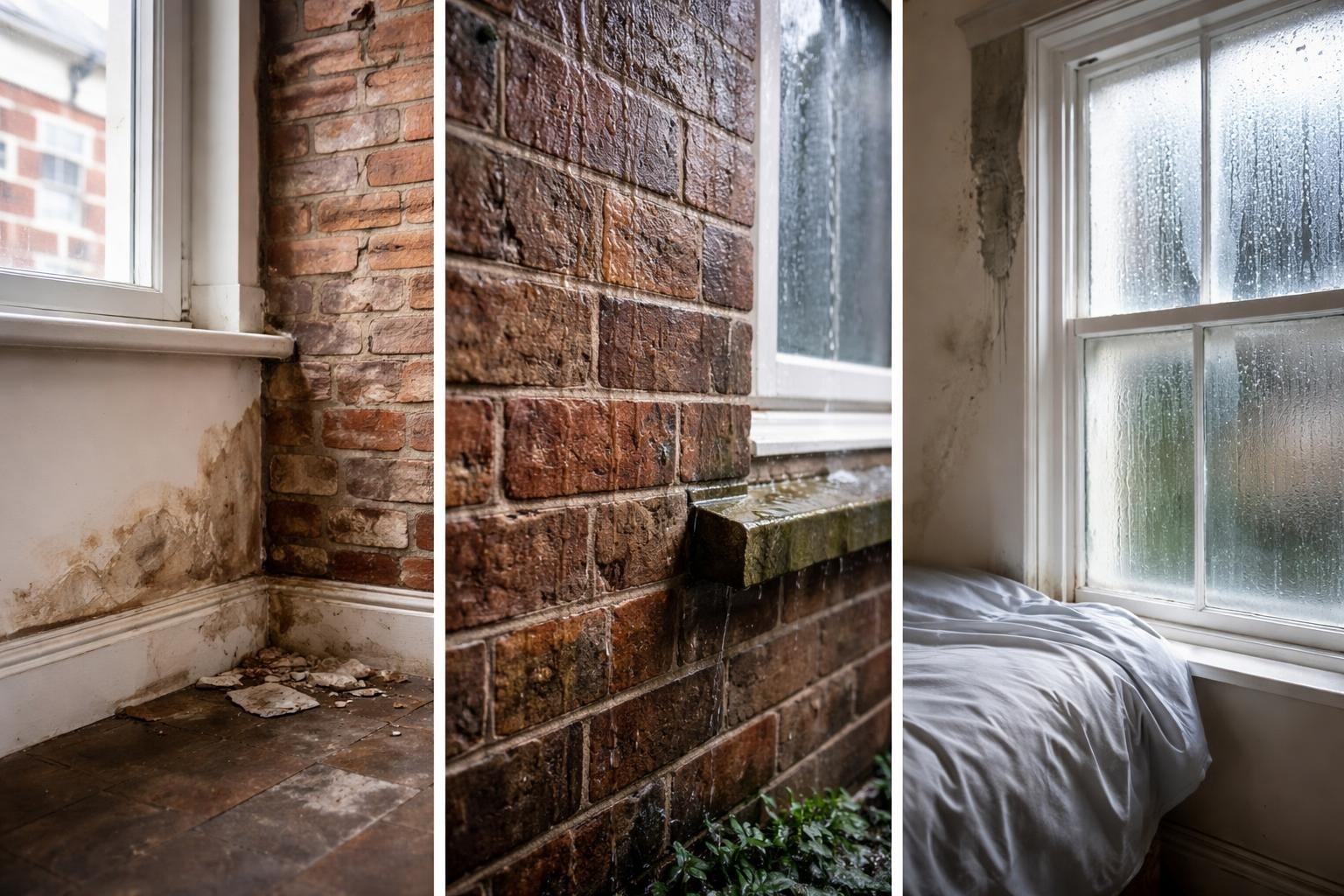
Property owners across the capital face persistent challenges with moisture-related issues, making a professional damp survey london essential for maintaining building integrity. Whether you're purchasing a Victorian terrace in Hackney or renovating a Georgian townhouse in Kensington, understanding the complexities of dampness detection can save thousands in remediation costs. London's unique climate, aging building stock, and diverse construction methods create specific moisture problems that require expert assessment and diagnosis.
Understanding Damp Problems in London Properties
London's architectural landscape presents distinctive challenges when it comes to moisture management. The capital's building stock ranges from medieval structures to modern developments, each with unique vulnerabilities to dampness.
The city's microclimate significantly influences moisture levels within buildings. High humidity, frequent rainfall, and the urban heat island effect create conditions where condensation and penetrating damp thrive. Properties built before 1950 often lack effective damp-proof courses, whilst even newer constructions can suffer from installation defects or material degradation.
Common Types of Damp Affecting London Buildings
Understanding the classification of dampness helps property owners recognize when a damp survey london becomes necessary. Each type presents distinct symptoms and requires different diagnostic approaches.
Rising damp occurs when groundwater travels upward through porous materials via capillary action. This phenomenon typically affects walls up to one metre above ground level, creating characteristic tide marks and salt deposits. London's clay-rich soil composition can exacerbate this issue, particularly in properties with compromised or absent damp-proof courses.
Penetrating damp enters buildings through external defects such as damaged pointing, cracked render, or faulty guttering. The capital's exposure to driving rain, especially in exposed locations, makes this a prevalent concern. Properties in conservation areas face additional complications, as repairs must comply with planning restrictions whilst addressing moisture ingress.
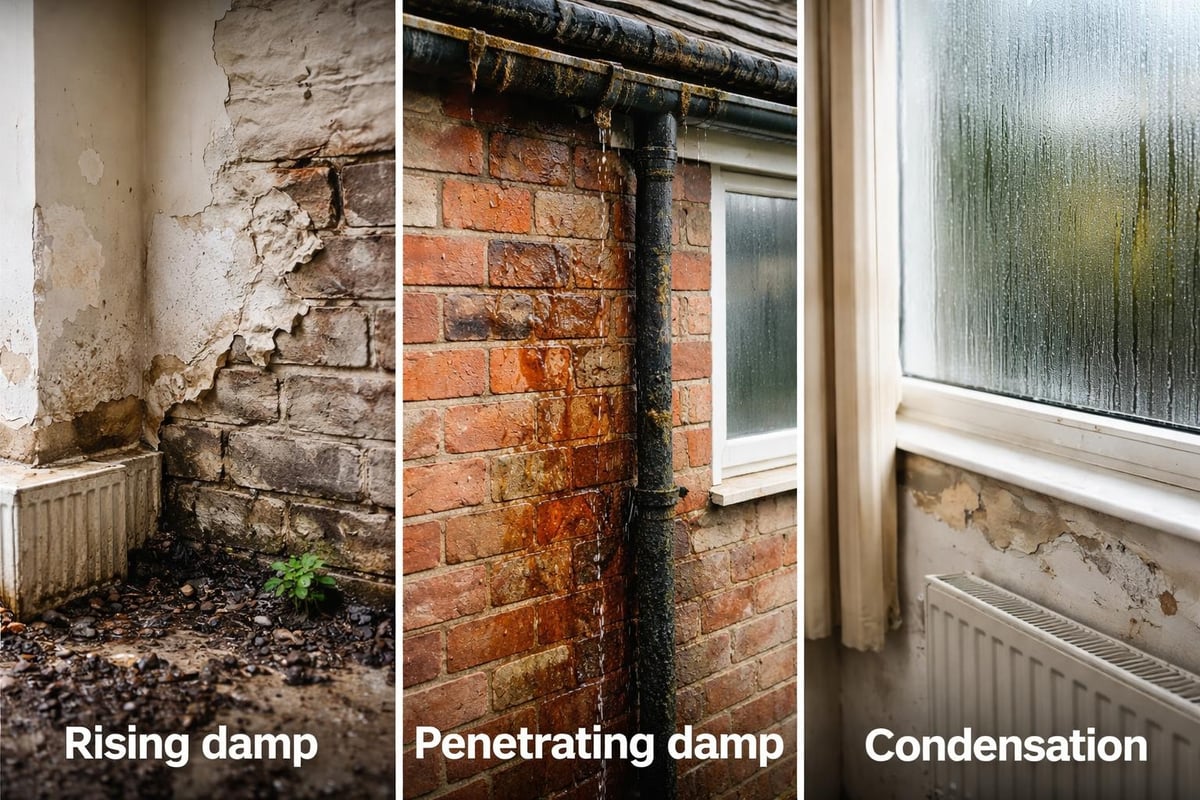
Condensation represents the most frequently misdiagnosed moisture problem. When warm, humid air contacts cold surfaces, water vapour condenses into liquid. Modern improvements like double glazing and cavity wall insulation, whilst energy-efficient, can inadvertently reduce ventilation and increase condensation risk.
| Damp Type | Primary Cause | Typical Location | Key Indicators |
|---|---|---|---|
| Rising Damp | Groundwater capillary action | Ground to 1m height | Tide marks, salt deposits, peeling paint |
| Penetrating Damp | External defects | External walls, around windows | Damp patches after rain, musty odour |
| Condensation | High humidity, poor ventilation | Bathrooms, kitchens, cold corners | Mould growth, water droplets, misted windows |
What a Damp Survey London Involves
Professional moisture assessment requires systematic investigation using calibrated equipment and experienced interpretation. A comprehensive damp survey london employs multiple diagnostic techniques to determine the source, extent, and severity of moisture problems.
Initial Visual Assessment
Qualified surveyors begin with thorough visual inspection, examining external and internal building elements. This includes checking roof condition, guttering, downpipes, pointing, render, window frames, and ventilation provision. Internal inspection focuses on identifying symptoms such as staining, salt efflorescence, timber decay, and mould growth.
The surveyor documents property characteristics including construction type, age, previous alterations, and heating systems. This contextual information proves invaluable when correlating moisture meter readings with probable causes.
Moisture Detection Equipment
Modern damp surveys utilize sophisticated instrumentation to measure moisture levels accurately. Electrical resistance meters provide surface readings, whilst capacitance meters penetrate deeper into substrates without causing damage. Infrared thermography reveals thermal anomalies indicating moisture presence or insulation defects.
Hygrometers measure relative humidity within rooms, helping identify condensation risks. Calcium carbide testing provides precise moisture content percentages in masonry and concrete, particularly useful for definitive diagnosis when other readings prove inconclusive.
- Non-invasive scanning identifies moisture patterns behind finishes
- Deep-wall probes access moisture levels within cavity walls
- Tramex meters detect moisture in various building materials
- Thermal imaging cameras visualize temperature differentials
- Radio frequency technology maps moisture distribution
The RICS guidance on dampness in buildings emphasizes the importance of combining multiple diagnostic methods rather than relying solely on meter readings, which can produce misleading results when hygroscopic salts are present.
Choosing a Qualified Surveyor in London
Selecting an appropriately qualified professional ensures accurate diagnosis and appropriate recommendations. The London market includes numerous surveyors with varying expertise levels, making informed selection crucial.
Professional Qualifications and Accreditations
Reputable surveyors hold recognized qualifications demonstrating competence in dampness investigation. Look for Chartered Surveyors registered with the Royal Institution of Chartered Surveyors (RICS), who adhere to professional standards and continuing professional development requirements. Property Care Association (PCA) membership indicates specialist knowledge in dampness and timber decay.
Certified Surveyor in Structural Waterproofing (CSSW) qualifications demonstrate advanced expertise in moisture management and remediation specification. These credentials ensure the surveyor possesses current knowledge of diagnostic techniques, building pathology, and appropriate solutions.

Experience with London Properties
London's diverse building stock requires specialist understanding. Victorian and Georgian properties present different challenges compared to post-war constructions or modern developments. Surveyors familiar with local building methods, materials, and common defects provide more accurate assessments.
Consider surveyors with demonstrable experience in your property type and location. Conservation area properties require additional sensitivity to planning requirements and sympathetic repair approaches. A damp survey london conducted by locally experienced professionals often identifies issues that generalist surveyors might overlook.
Damp Survey Costs and Timeframes
Understanding the investment required for professional assessment helps property owners budget appropriately. Pricing varies based on property size, complexity, and survey scope.
Typical Survey Pricing in 2026
Standard residential damp surveys in London typically range from £200 to £600, depending on property size and accessibility. Larger properties, listed buildings, or those requiring extensive investigation may command higher fees. Some companies offer tiered service levels, from basic assessments to comprehensive reports suitable for mortgage purposes or legal disputes.
Factors influencing cost include:
- Property size and number of floors requiring inspection
- Survey urgency and scheduling requirements
- Report detail level and technical specification
- Additional testing such as air quality or salt analysis
- Travel costs for surveyors serving outer London boroughs
Be cautious of unusually low prices, which may indicate inexperienced surveyors or companies primarily interested in selling remediation work rather than providing objective assessments. Independent surveyors without vested interests in subsequent work often provide the most impartial advice.
Survey Duration and Report Delivery
Most residential damp surveys take between two to four hours on-site, depending on property complexity. The surveyor requires access to all areas, including loft spaces, cellars, and cupboards where moisture problems commonly occur. Occupiers should ensure utilities remain connected, as heating systems and ventilation affect moisture readings.
Professional reports typically arrive within five to ten working days, allowing time for data analysis and recommendation formulation. Detailed reports include moisture meter readings, photographs, thermal images, and prioritized remediation recommendations with cost estimates.
Interpreting Your Damp Survey Report
A comprehensive report provides invaluable information for decision-making, whether you're purchasing property, planning renovations, or addressing existing problems. Understanding the content helps you take appropriate action.
Key Report Components
Professional damp surveys include detailed findings sections documenting observations room-by-room, with corresponding moisture readings and photographic evidence. The report should clearly identify damp types, probable causes, and affected areas.
| Report Section | Purpose | What to Look For |
|---|---|---|
| Executive Summary | Quick overview of findings | Severity rating, urgent issues |
| Methodology | Equipment and techniques used | Professional-grade equipment mentioned |
| Detailed Findings | Room-by-room assessment | Specific moisture readings and locations |
| Diagnosis | Root cause identification | Clear explanation of damp sources |
| Recommendations | Remediation strategy | Prioritized, detailed solutions |
| Cost Estimates | Budget planning | Realistic price ranges for repairs |
Recommendations should prioritize addressing root causes rather than merely treating symptoms. For instance, installing a damp-proof course without repairing defective guttering wastes resources, as penetrating damp continues despite rising damp treatment.
Understanding Moisture Readings
Surveyors present moisture content as percentages or comparative scales. Wood moisture content above 20% indicates active dampness and decay risk. Masonry readings require more nuanced interpretation, as different materials exhibit varying moisture characteristics.
The report should explain readings in context rather than simply listing numbers. High readings near plumbing fixtures might indicate leaks rather than structural dampness. Elevated readings throughout external walls suggest rising or penetrating damp requiring systematic investigation.
Common Damp Issues in Different London Areas
London's geography and development patterns create location-specific moisture challenges. Understanding these helps property owners anticipate potential problems.
Thames-Side Properties
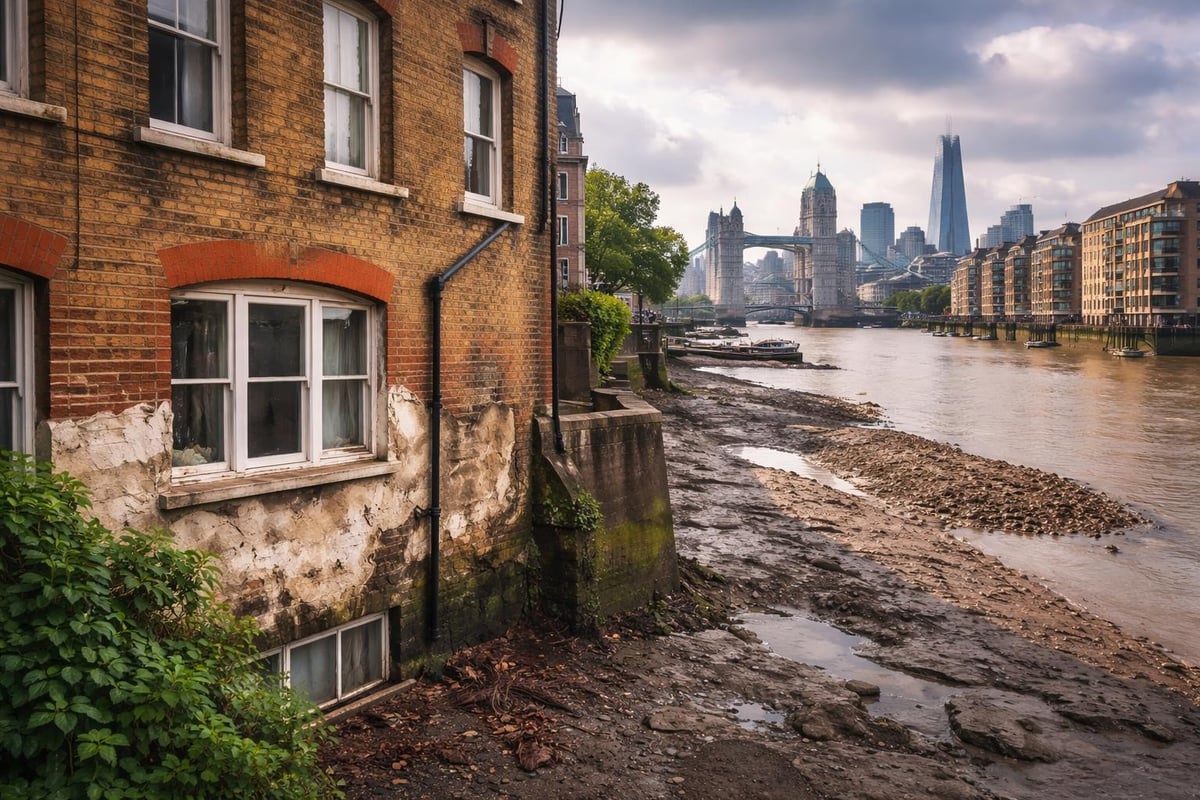
Properties near the Thames or London's numerous waterways face elevated groundwater levels and flood risk. Areas including Bermondsey, Putney, and Hammersmith experience seasonal water table fluctuations affecting basements and ground floors. A damp survey london for riverside properties should assess flood defenses, drainage adequacy, and tanking integrity.
North London Clay Soil Areas
Districts built on London Clay, including Hampstead, Islington, and Barnet, experience soil shrinkage during dry periods and swelling when wet. This movement stresses foundations and masonry, creating cracks allowing moisture penetration. Properties in these areas benefit from regular monitoring, particularly during extended dry spells.
Victorian and Georgian Quarters
Central and inner London neighborhoods contain extensive Victorian and Georgian housing stock. These properties often feature solid brick walls without cavity construction, making them vulnerable to penetrating damp. Original lime mortars and plasters require sympathetic repair approaches, as cement-based products can exacerbate moisture problems.
- East London Victorian terraces commonly suffer from missing or failed damp-proof courses
- West London period properties often have concealed plumbing leaks within thick walls
- South London estates may have asbestos-containing materials requiring specialist handling during repairs
- Conservation areas demand planning-compliant repair methods
Damp Prevention Strategies for London Homes
Proactive maintenance significantly reduces moisture problems and extends building lifespan. Property owners can implement various preventative measures between professional surveys.
Regular Maintenance Schedules
Annual maintenance tasks include gutter cleaning, particularly during autumn when leaves accumulate. Check downpipes discharge away from foundations, ideally connecting to proper drainage systems. Inspect external pointing annually, repairing any cracks promptly before moisture penetrates masonry.
Interior maintenance priorities:
- Ensure trickle vents in windows remain open for continuous ventilation
- Use extractor fans during cooking and bathing, venting externally
- Maintain consistent heating to prevent cold surface condensation
- Check under sinks and around appliances for plumbing leaks
- Monitor humidity levels, keeping below 60% relative humidity
The BRE guide to diagnosing dampness provides detailed information on maintaining buildings to minimize moisture problems through appropriate ventilation, heating, and repair strategies.
Ventilation and Heating Considerations
Modern energy efficiency improvements sometimes inadvertently reduce ventilation rates, increasing condensation risk. Balance thermal performance with adequate air changes, particularly in kitchens, bathrooms, and bedrooms where moisture generation concentrates.
Intermittent heating creates temperature fluctuations encouraging condensation. Maintain moderate, consistent temperatures rather than allowing properties to cool completely between heating cycles. This approach proves particularly important in vacant properties or those with occasional occupation.
When to Commission a Damp Survey London
Certain circumstances warrant professional moisture assessment rather than attempting DIY diagnosis. Recognizing these situations prevents minor issues escalating into major problems.
Property Purchase Scenarios
Standard mortgage valuations rarely include detailed dampness investigation. Commission an independent damp survey london before exchanging contracts, particularly for:
- Properties over 50 years old without recent damp-proofing
- Buildings showing visible dampness symptoms
- Properties in high-risk locations near water or on clay soils
- Homes with previous damp treatment or structural alterations
- Basements or cellars, especially those converted to habitable space
Survey findings inform purchase negotiations, allowing price adjustments reflecting necessary remediation work. Some mortgage lenders require specialist reports before approving loans on properties with evident moisture problems.
Symptoms Requiring Investigation
Don't ignore persistent dampness signs. Early professional intervention typically costs substantially less than addressing advanced decay or structural damage. Symptoms warranting immediate survey include:
- Musty odours persisting despite cleaning and ventilation
- Visible mould growth, particularly black mould species
- Peeling wallpaper or paint on external walls
- Timber skirting boards or floor joists showing softness or fungal growth
- Salt deposits or white powder appearing on wall surfaces
- Damp patches appearing after rainfall or during winter months
Damp Remediation Following Survey
Survey reports recommend appropriate solutions based on identified causes. Understanding common treatments helps property owners make informed decisions about contractor selection and remedy specification.
Rising Damp Treatments
Chemical damp-proof course injection remains the most common rising damp treatment. Contractors drill holes into affected walls and inject water-repellent silicone or cream formulations creating a moisture barrier. This method suits most traditional constructions, though success depends on correct diagnosis and proper installation.
Alternative approaches include physical damp-proof course installation, where horizontal layers are inserted into walls. This invasive technique suits properties requiring extensive structural work or where chemical injection proves unsuitable.
Penetrating Damp Solutions
Addressing penetrating damp requires identifying and repairing defects allowing moisture entry. Common interventions include repointing with appropriate lime mortars, replacing damaged render, repairing or replacing guttering and downpipes, and addressing roof defects.
External waterproofing treatments provide supplementary protection but shouldn't substitute for proper repairs. Breathable masonry paints and water-repellent treatments allow moisture vapor transmission whilst preventing liquid water penetration.
Condensation Management
Condensation problems require improved ventilation and heating rather than structural damp-proofing. Solutions include:
| Solution Type | Application | Effectiveness | Considerations |
|---|---|---|---|
| Mechanical Ventilation | Whole-house or room-specific | High | Installation cost, ongoing energy use |
| Positive Input Ventilation | Loft-mounted unit | Medium-High | Requires loft space, filters need replacement |
| Increased Insulation | External walls, loft | Medium | Reduces cold surfaces attracting condensation |
| Dehumidifiers | Temporary or permanent | Medium | Ongoing electricity costs, maintenance |
Regulatory Compliance and Building Standards
Dampness remediation must comply with current building regulations ensuring work quality and occupant safety. Understanding these requirements protects property owners from substandard work.
Building Regulations Implications
Extensive damp treatments, particularly those involving structural alterations or tanking installations, may require Building Control approval. Local authorities or Approved Inspectors ensure work meets Part C (Site preparation and resistance to contaminates and moisture) requirements.
Guarantee-backed schemes through organizations like the Property Care Association provide insurance-backed warranties, offering recourse if treatments fail prematurely. These schemes require contractors to meet specific standards and undergo regular auditing.
Health and Safety Considerations
Damp environments harbor mould species potentially affecting respiratory health, particularly for vulnerable individuals including children, elderly persons, and those with asthma or immune compromises. Professional remediation ensures safe removal and disposal of contaminated materials.
Asbestos commonly features in properties built before 2000, particularly in textured coatings, insulation, and cement products. Disturbing asbestos-containing materials during damp repairs requires licensed contractors following strict safety protocols. A thorough damp survey london should identify potential asbestos presence requiring specialist handling.
Professional Survey vs DIY Assessment
Technology availability tempts some property owners to attempt self-diagnosis using consumer-grade moisture meters. However, professional expertise provides significant advantages over DIY approaches.
Limitations of DIY Moisture Detection
Consumer moisture meters lack the sophistication and calibration of professional equipment. These devices often produce misleading readings affected by hygroscopic salts, decorative materials, or operator error. Interpreting readings requires understanding building construction, material properties, and moisture behavior.
Misdiagnosis leads to inappropriate treatments wasting money whilst leaving actual problems unaddressed. For example, treating condensation as rising damp through unnecessary damp-proof course installation fails to resolve the moisture source whilst adding unnecessary expense.
Value of Professional Expertise
Qualified surveyors combine equipment readings with visual assessment, contextual knowledge, and experience-based interpretation. They recognize patterns indicating specific problems and understand how different damp types present in various building types and ages.
Professional reports provide documentation valuable for insurance claims, legal disputes, or future property sales. Independent assessments carry credibility that self-diagnosis cannot match, particularly when disagreements arise between buyers and sellers or landlords and tenants.
Future-Proofing London Properties Against Damp
Climate projections suggest increasing rainfall intensity and frequency, potentially exacerbating moisture problems across London. Forward-thinking property owners consider long-term resilience when addressing current dampness issues.
Climate Adaptation Strategies
Sustainable urban drainage systems (SUDS) reduce groundwater levels affecting basements and foundations. Installing permeable paving, soakaways, and rain gardens helps manage surface water whilst reducing flood risk.
Improving building fabric resilience includes upgrading guttering capacity, installing additional downpipes, and creating adequate eaves overhangs. These measures prepare properties for projected climate patterns whilst addressing current moisture management.
Technology and Monitoring
Smart home technology enables continuous moisture monitoring through wireless sensors triggering alerts when readings exceed predetermined thresholds. This early warning system allows prompt intervention before serious damage develops.
Building management systems coordinate heating, ventilation, and dehumidification optimizing internal conditions automatically. These systems prove particularly valuable in vacant properties, holiday homes, or buildings with intermittent occupation patterns.
The Importance of Specialist Knowledge
Dampness assessment combines building pathology understanding, materials science, and diagnostic expertise. Selecting appropriately qualified surveyors ensures accurate diagnosis and effective remediation.
Properties across Essex, London, and Kent benefit from surveyors understanding regional building characteristics, local geology, and climate patterns affecting moisture behavior. This specialist knowledge proves invaluable when investigating complex moisture problems or advising on heritage properties requiring sympathetic treatment approaches.
Regular professional assessment, typically every five years or when purchasing property, maintains building condition and prevents minor moisture ingress developing into major structural problems. Investment in quality survey work delivers long-term savings through early problem detection and appropriate remediation strategy development.
Understanding dampness causes, diagnostic methods, and effective remediation protects your property investment whilst ensuring healthy living conditions. Professional assessment provides the foundation for informed decision-making, whether you're addressing existing problems or conducting due diligence before purchase. Mouldsurv Ltd offers comprehensive moisture investigation services across Essex, London, and Kent, combining advanced diagnostic equipment with extensive experience in identifying and resolving dampness problems. Contact our certified specialists today to arrange your professional property assessment and receive expert guidance tailored to your specific requirements.