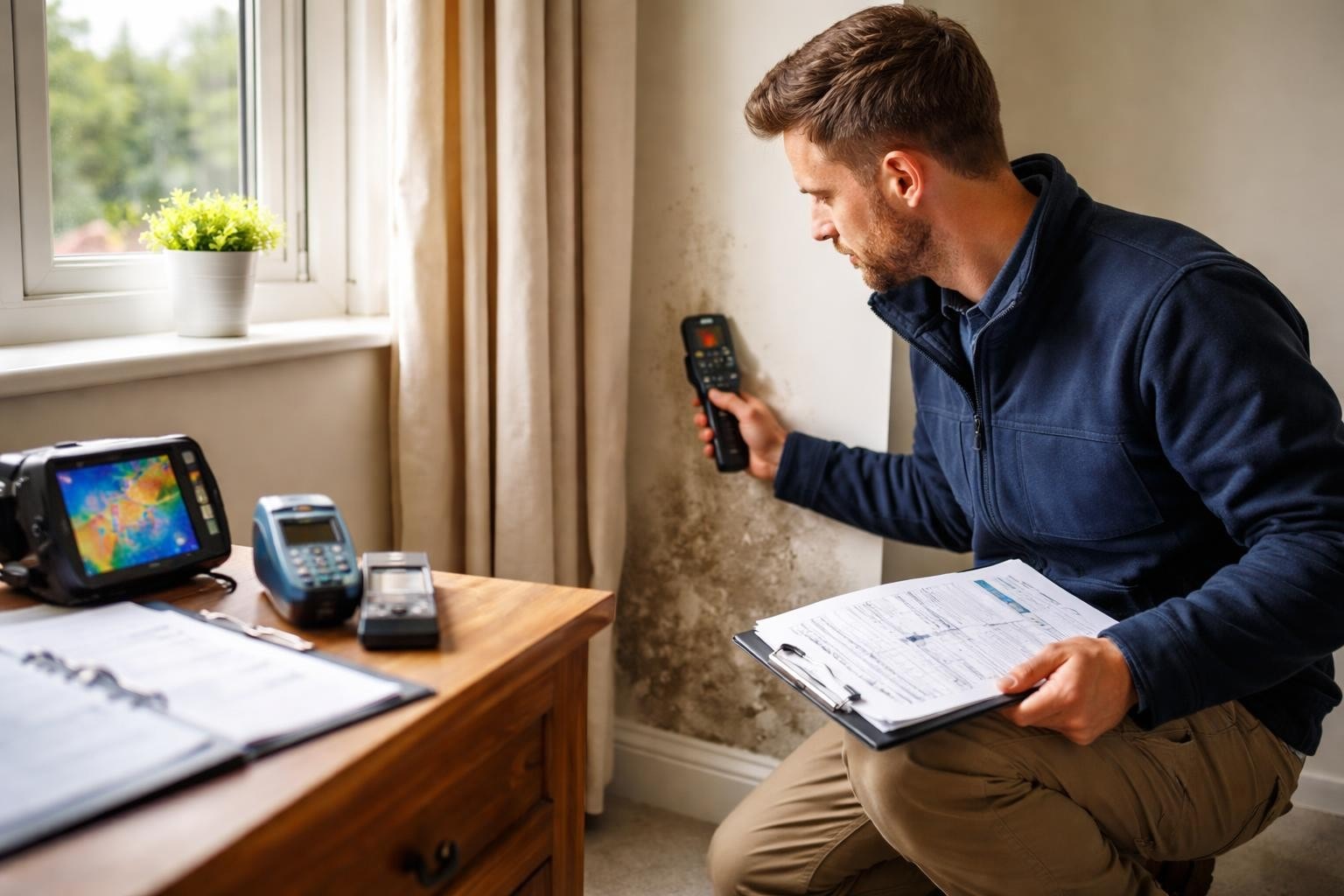
Property owners in Chelmsford face unique challenges when it comes to moisture-related issues, particularly given Essex's climate and the varied age of housing stock across the region. A professional chelmsford damp survey provides essential diagnostic information that enables homeowners, landlords, and commercial property managers to address moisture problems before they escalate into structural damage or health hazards. Understanding what a comprehensive survey entails, recognising when one is necessary, and selecting the right surveyor can save thousands of pounds whilst protecting property value and occupant wellbeing.
Understanding Different Types of Damp Surveys
Not all damp surveys offer the same level of analysis or diagnostic capability. The type of survey required depends on the severity of symptoms, property age, and intended use of the findings.
Basic Visual Inspections
A standard visual inspection represents the most straightforward form of assessment. Surveyors examine visible signs of moisture ingress including staining, peeling paint, deteriorating plaster, and condensation patterns. This approach suits properties with obvious damp issues where the source appears clear, though it rarely provides comprehensive answers for complex moisture problems.
Limitations of visual-only assessments include:
- Inability to detect hidden moisture within wall cavities
- No quantitative measurements of moisture levels
- Limited identification of root causes
- Difficulty distinguishing between damp types
Comprehensive Diagnostic Surveys
Professional diagnostic surveys employ advanced equipment and methodologies to provide detailed analysis. These assessments utilise moisture meters, thermal imaging cameras, hygrometers, and sometimes invasive sampling techniques. Understanding what goes into a damp survey reveals the complexity of proper diagnostic work and why specialist expertise matters.
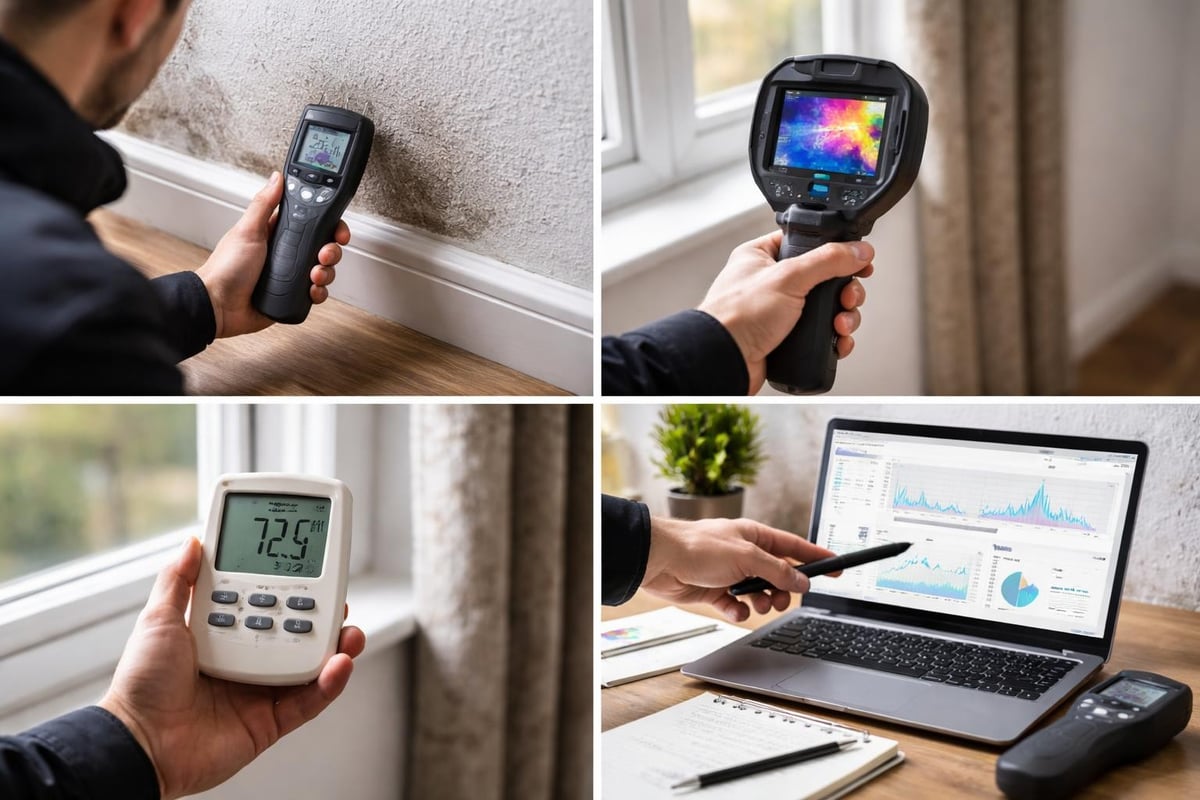
A thorough chelmsford damp survey should incorporate both non-invasive and, where necessary, invasive testing methods. Non-invasive techniques preserve property integrity whilst gathering substantial data, but invasive sampling may prove essential when dealing with suspected salt contamination or determining the precise extent of timber decay.
| Survey Type | Equipment Used | Typical Duration | Best For |
|---|---|---|---|
| Visual Inspection | Eyes, torch, basic moisture meter | 1-2 hours | Initial assessment, obvious issues |
| Standard Diagnostic | Moisture meters, hygrometer, camera | 2-4 hours | Most residential properties |
| Comprehensive Analysis | Thermal imaging, carbide testing, sampling | 4-6 hours | Complex cases, legal disputes |
| Specialist Investigation | Laboratory analysis, invasive testing | Variable | Severe damage, pre-purchase surveys |
Pre-Purchase Property Surveys
When buying property in Chelmsford, a dedicated damp survey provides invaluable leverage during negotiations and prevents costly surprises post-completion. Building surveys often include basic damp assessment, but dedicated surveys offer greater detail and actionable remediation specifications.
Recognising When You Need a Chelmsford Damp Survey
Identifying the right moment to commission professional assessment prevents minor issues from developing into major problems requiring extensive remediation work.
Observable Warning Signs
Musty odours represent one of the earliest indicators of moisture problems, often detectable before visible damage appears. These smells result from microbial activity within damp materials and should never be ignored, particularly in properties with poor ventilation.
Common visual indicators requiring professional assessment:
- Tide marks or staining on walls, especially at skirting level
- Peeling wallpaper or bubbling paint
- Efflorescence (white salt deposits) on masonry surfaces
- Black mould growth, particularly in corners or behind furniture
- Rotting timber around window frames or floor joists
- Condensation persistently forming on windows and walls
Cold spots on internal walls may indicate thermal bridging or cavity wall problems, both of which can contribute to condensation damp. Thermal imaging during a chelmsford damp survey identifies these anomalies with precision, enabling targeted remediation strategies.
Seasonal Considerations
Essex weather patterns mean certain damp types manifest more prominently during specific seasons. Winter condensation issues become apparent through extensive window streaming and mould growth, whilst penetrating damp from failing external render often reveals itself during prolonged autumn rainfall.
Property owners should consider scheduling surveys during or immediately after wet periods when symptoms are most evident. However, professional damp surveys utilise equipment capable of detecting moisture regardless of seasonal variations.
The Damp Survey Process Explained
Understanding the survey methodology helps property owners prepare appropriately and interpret findings accurately upon receiving the final report.
Initial Consultation and Property History
Reputable surveyors begin with detailed discussions about observed symptoms, property age, previous alterations, and any historical damp issues. This contextual information guides the inspection focus and ensures no relevant areas are overlooked.
- Property access preparation - clearing furniture from affected walls, providing historical documentation
- External inspection - assessing rainwater goods, ground levels, render condition, and pointing
- Internal examination - room-by-room analysis using moisture detection equipment
- Diagnostic testing - targeted investigation of suspect areas with appropriate tools
- Data compilation - recording measurements, photographs, and observations
- Report preparation - analysing findings and formulating remediation recommendations
Advanced Diagnostic Equipment
Modern moisture detection technology has transformed damp diagnosis from educated guesswork into precise science. Capacitance moisture meters measure moisture content without damaging surfaces, whilst resistance meters using probe pins provide accurate readings in specific materials.
Thermal imaging cameras detect temperature variations invisible to the naked eye, revealing moisture pathways, thermal bridging, and insulation defects. These non-invasive tools prove particularly valuable in occupied properties where minimising disruption matters.
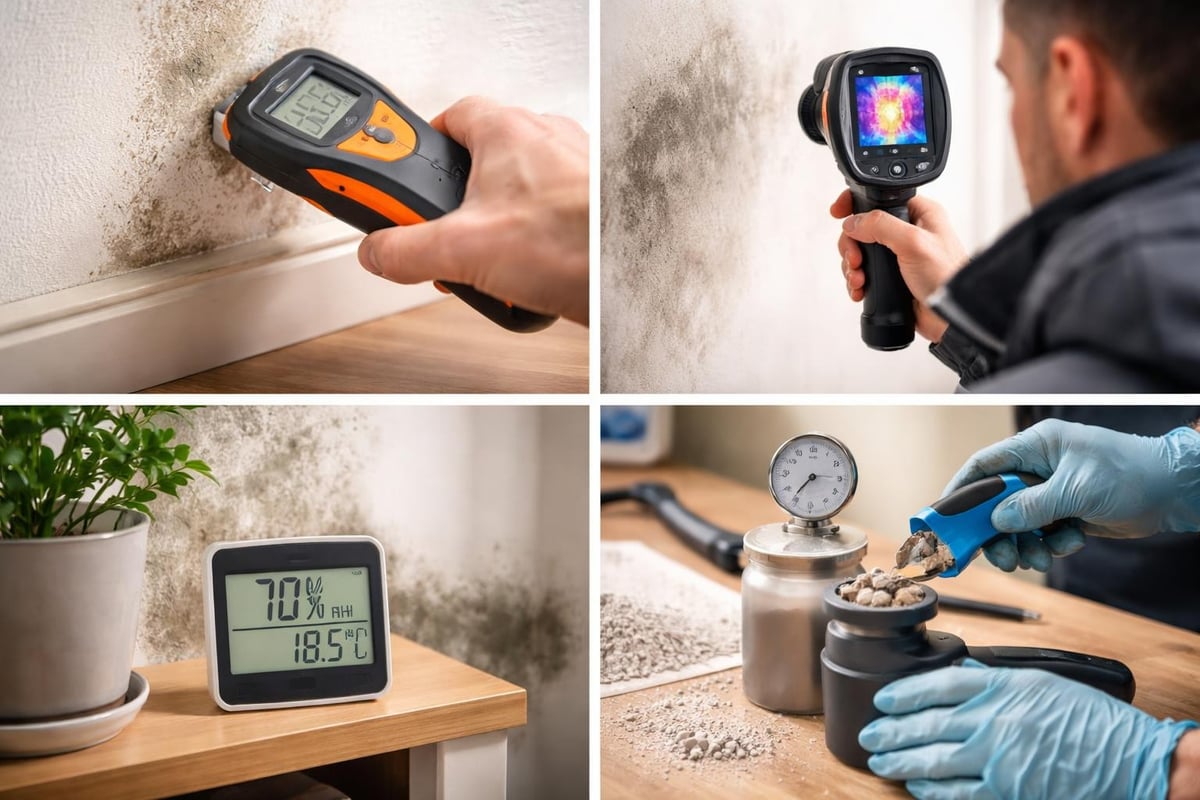
For absolute moisture content verification, carbide testing involves sampling material and measuring the reaction with calcium carbide. This chemical test eliminates ambiguity around contamination from hygroscopic salts that can affect electrical moisture meter readings.
Distinguishing Between Damp Types
Accurate diagnosis depends on correctly identifying whether moisture originates from rising damp, penetrating damp, or condensation. Each type requires different remediation approaches, making correct identification essential.
Rising damp characteristics:
- Affects ground floor walls, typically up to one metre height
- Tide marks and salt deposits at maximum rising level
- Damage concentrated at base of walls, diminishing with height
- Often associated with absent or failed damp-proof courses
Penetrating damp indicators:
- Localised damp patches often corresponding to external defects
- Staining patterns that worsen during rainfall
- Damp appearing on upper floors or around specific features
- Clear correlation between external building defects and internal moisture
Condensation damp patterns:
- Widespread moisture on cold surfaces, particularly north-facing walls
- Mould growth in corners, behind furniture, and in poorly ventilated spaces
- Streaming windows and damp patches on ceilings
- Seasonal variation with worse symptoms during winter months
A professional chelmsford damp survey from qualified specialists such as Mouldsurv Ltd employs systematic testing protocols that definitively establish damp type and extent, removing guesswork from the diagnostic process.
Selecting a Qualified Damp Surveyor in Chelmsford
The surveyor's expertise directly influences diagnosis accuracy and subsequent remediation success. Choosing appropriately qualified professionals protects both property and wallet.
Essential Qualifications and Certifications
Whilst no legal requirement mandates specific qualifications for damp surveyors, industry-recognised credentials demonstrate commitment to professional standards. The Property Care Association (PCA) provides specialist training and certification, with certificated surveyors (CSRT or CSSW) possessing validated expertise in damp diagnosis.
Look for surveyors holding relevant qualifications including:
- PCA Certificated Surveyor in Remedial Treatment (CSRT)
- PCA Certificated Surveyor in Structural Waterproofing (CSSW)
- RICS qualifications with relevant specialist experience
- Membership of professional bodies with codes of conduct
Understanding who can carry out a damp survey clarifies the importance of proper credentials and helps property owners avoid unqualified assessors who may misdiagnose problems or recommend unnecessary treatments.
Independence and Conflicts of Interest
Surveyors affiliated with remediation companies face inherent conflicts of interest that may compromise diagnostic integrity. Independent surveyors without financial incentive to recommend specific treatments provide more objective assessments.
When commissioning a chelmsford damp survey, explicitly ask whether the surveyor benefits financially from recommended remediation work. Truly independent assessors charge solely for diagnostic services, leaving property owners free to obtain competitive quotes for any required treatments.
Local Knowledge and Experience
Familiarity with Chelmsford's housing stock, local building practices, and regional environmental factors enhances diagnostic accuracy. Surveyors experienced with Essex properties understand prevalent issues including Victorian terrace rising damp, 1930s cavity wall problems, and post-war concrete construction challenges.
| Selection Criteria | What to Look For | Red Flags |
|---|---|---|
| Qualifications | PCA certification, professional memberships | No industry credentials |
| Independence | Separate from contractors | Tied to remediation company |
| Equipment | Modern diagnostic tools mentioned | Reliance on visual inspection only |
| Reporting | Detailed written reports with evidence | Verbal-only assessments |
| Insurance | Professional indemnity coverage | Inability to provide insurance details |
Interpreting Your Damp Survey Report
Survey reports vary considerably in quality, detail, and usefulness. Understanding what constitutes a comprehensive report enables informed decision-making about remediation investments.
Essential Report Components
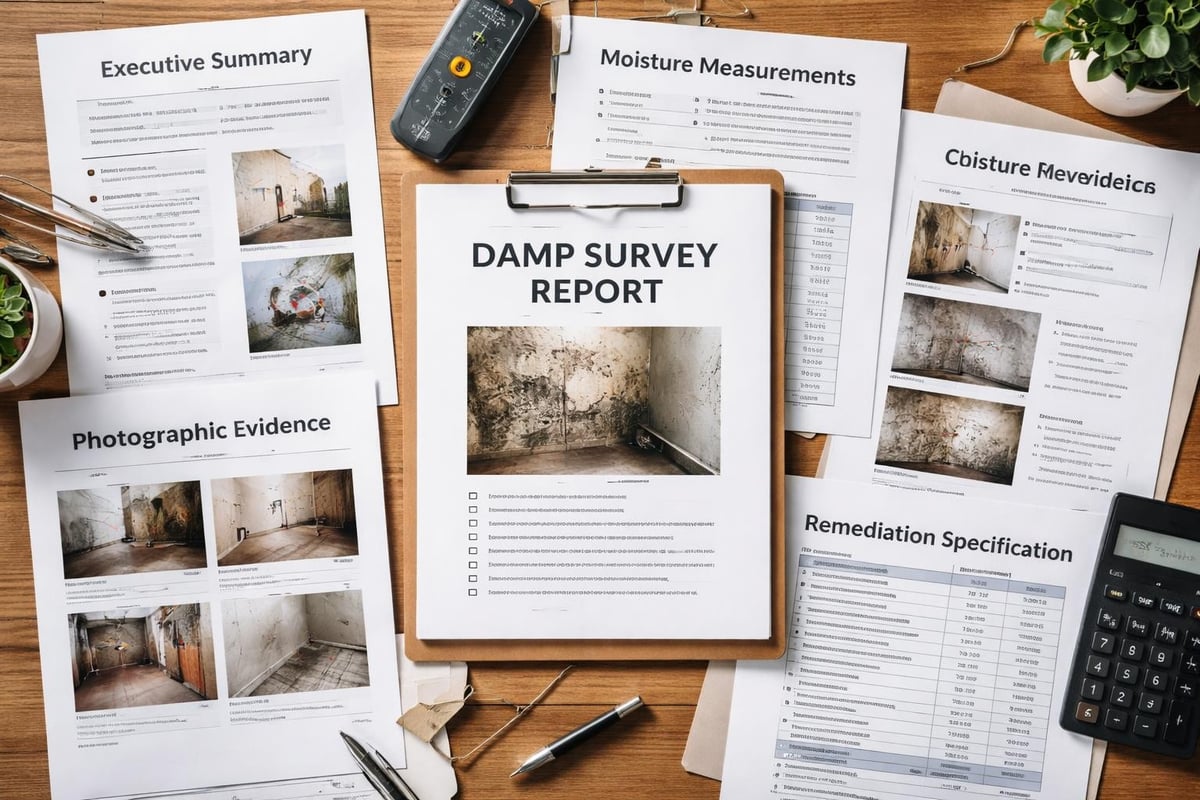
Professional surveys deliver detailed written reports incorporating measurements, photographic evidence, diagnostic findings, and remediation specifications. Moisture meter readings should appear alongside thermal images and clear explanations of observed conditions.
Comprehensive reports include:
- Executive summary of key findings and recommendations
- Detailed room-by-room analysis with measurements
- Photographic evidence clearly annotated
- Thermal imaging analysis where applicable
- Root cause identification and explanation
- Specific remediation recommendations with methodology
- Approximate cost indications or scope for quotation
Vague statements without supporting evidence or generic recommendations applicable to any property suggest inadequate investigation. Quality reports demonstrate thorough analysis specific to the surveyed property's unique circumstances.
Understanding Remediation Recommendations
Survey reports should distinguish between essential remediation addressing root causes and optional improvements enhancing moisture management. This clarity prevents unnecessary expenditure whilst ensuring critical issues receive appropriate attention.
For rising damp, recommendations typically involve damp-proof course installation or renewal, whilst penetrating damp requires addressing specific building defects such as failed pointing, damaged render, or defective rainwater goods. Condensation issues demand ventilation improvements, insulation upgrades, or lifestyle modifications rather than physical damp-proofing treatments.
Practical guidance on damp and mould helps property owners understand the relationship between diagnosis and appropriate treatment strategies, ensuring remediation work addresses actual problems rather than symptoms.
Cost Considerations for Chelmsford Damp Surveys
Survey costs vary based on property size, complexity, and the assessment level required. Understanding pricing structures helps budget appropriately whilst avoiding either inadequate assessments or unnecessary expenditure.
Typical Price Ranges
Basic visual inspections for small residential properties might cost £150-£300, though these limited assessments rarely provide sufficient information for confident remediation planning. Comprehensive diagnostic surveys using thermal imaging and detailed moisture mapping typically range from £400-£800 for average-sized homes.
Larger properties, commercial buildings, or complex cases requiring specialist testing including laboratory analysis may exceed £1,000. When considered against potential remediation costs often running into thousands, professional survey investment provides excellent value through accurate diagnosis preventing inappropriate treatments.
Hidden Costs and Additional Fees
Some surveyors charge travel fees for properties outside their primary service area, whilst others include reasonable travel within quoted prices. Clarify whether thermal imaging, detailed reporting, and follow-up consultations incur additional charges beyond the base survey fee.
Post-survey quotations for remediation work should be obtained independently unless the surveyor genuinely operates without contractor affiliations. Bundled survey-and-treatment packages may appear convenient but often lack the competitive tension that ensures fair pricing.
Return on Investment
Property transactions frequently involve negotiation based on survey findings, with damp issues typically reducing property values by amounts significantly exceeding survey costs. A £500 survey investment might identify issues warranting £5,000-£10,000 purchase price reductions, demonstrating clear financial benefit beyond the diagnostic value alone.
For existing owners, accurate diagnosis prevents wasted expenditure on inappropriate treatments whilst enabling targeted remediation that preserves property value and prevents progressive deterioration. Finding trusted damp surveyors in Chelmsford through verified directories helps locate reputable professionals offering transparent pricing and quality service.
Legal and Regulatory Considerations
Damp problems carry legal implications for landlords, whilst buyers rely on survey findings for informed purchase decisions. Understanding these contexts helps property stakeholders manage responsibilities appropriately.
Landlord Obligations
The Homes (Fitness for Human Habitation) Act 2018 requires rental properties to remain free from serious damp and mould problems throughout tenancies. Landlords failing to address reported damp issues face potential legal action from tenants experiencing health impacts or property damage.
Proactive chelmsford damp survey commissioning demonstrates responsible property management and provides evidence of appropriate action when issues arise. Regular surveys for older properties or those with historical damp problems help landlords meet legal obligations whilst protecting tenant wellbeing.
Building Regulations and Planning
Certain remediation works require Building Regulations approval, particularly when involving structural alterations, damp-proof course installation, or waterproofing systems. Survey reports should indicate when proposed remediation triggers regulatory requirements, enabling proper compliance planning.
Listed buildings and properties within conservation areas face additional restrictions on permissible remediation methods. Surveyors familiar with heritage property constraints provide recommendations compatible with planning requirements and conservation principles.
Professional Standards and Accountability
Surveyors operating to professional standards carry professional indemnity insurance protecting clients against losses resulting from negligent advice. This insurance provides recourse if surveys fail to identify significant issues or recommend inappropriate treatments causing damage.
Companies demonstrating commitment to quality management systems and formal complaints procedures, such as those detailed in professional service frameworks, offer additional accountability and consumer protection beyond minimum legal requirements.
Damp Survey Follow-Up and Remediation Planning
Survey completion marks the beginning rather than the end of the damp resolution process. Effective use of survey findings requires careful remediation planning and appropriate contractor selection.
Obtaining Competitive Quotes
Armed with detailed survey findings, property owners should obtain multiple quotations from reputable remediation specialists. Comprehensive survey reports enable like-for-like quote comparisons since contractors price against identical scope specifications rather than varying interpretations of problems.
- Distribute survey reports to three or more remediation contractors
- Request itemised quotations breaking down materials, labour, and guarantees
- Verify credentials including relevant certifications and insurance coverage
- Check references from previous customers with similar work
- Clarify guarantees covering both workmanship and effectiveness
- Confirm timescales for work completion and property disruption
Prioritising Remediation Works
Financial constraints may necessitate phased remediation, making prioritisation essential. Survey reports should distinguish between urgent works preventing progressive damage and desirable improvements enhancing moisture management.
Rising damp causing structural timber decay demands immediate attention, whilst minor condensation issues might be managed through interim measures pending comprehensive ventilation improvements. Professional surveyors guide this prioritisation based on risk assessment and deterioration trajectories.
Monitoring and Verification
Post-remediation monitoring confirms treatment effectiveness and identifies any residual issues requiring attention. Moisture readings should be taken at intervals following work completion, with measurements gradually decreasing as affected materials dry out.
Surveyors offering post-remediation verification visits provide valuable peace of mind that treatments have achieved intended results. This follow-up service, whilst sometimes incurring additional fees, ensures remediation investment delivers expected outcomes. Independent damp surveys in Chelmsford often include verification as part of comprehensive service packages, adding value beyond initial diagnosis.
Preventing Future Damp Problems
Survey findings should inform ongoing property maintenance strategies that prevent damp recurrence and maintain healthy internal environments.
Regular Maintenance Schedules
Proactive maintenance addressing minor defects before they enable moisture ingress proves far more cost-effective than reactive remediation following extensive damage. Annual property inspections should specifically examine:
- Rainwater goods - gutters, downpipes, and gullies for blockages or damage
- External surfaces - render, pointing, and paintwork condition
- Ground levels - ensuring surfaces slope away from buildings
- Ventilation - airbrick clearance and mechanical ventilation function
- Seals - around windows, doors, and service penetrations
Lifestyle and Usage Patterns
Condensation damp particularly relates to property usage and occupant behaviour. Understanding moisture production sources and implementing appropriate management strategies reduces condensation risk.
Moisture reduction strategies include:
- Adequate ventilation during moisture-producing activities (cooking, bathing, drying laundry)
- Maintaining consistent heating to prevent cold surface condensation
- Using extraction fans effectively in bathrooms and kitchens
- Avoiding over-crowding and ensuring air circulation around furniture
- Addressing any building defects affecting thermal performance
Environmental Control
Monitoring internal humidity levels using hygrometers enables proactive management before condensation becomes problematic. Ideal internal relative humidity ranges between 40-60%, with levels consistently above 70% indicating condensation risk requiring intervention.
Dehumidifiers provide temporary solutions for managing excess humidity, though they address symptoms rather than causes. Effective long-term condensation management requires adequate ventilation, appropriate heating strategies, and elimination of thermal bridging through proper insulation.
Professional damp assessment provides the foundation for effective moisture management, preventing the extensive property damage and health hazards that untreated damp creates. Whether you're purchasing property in Chelmsford, managing rental portfolios, or addressing concerning symptoms in your home, expert diagnosis ensures appropriate remediation investment that solves actual problems rather than symptoms. Mouldsurv Ltd delivers comprehensive damp surveys across Essex using advanced diagnostic equipment and certified expertise, providing detailed reports that enable informed decisions about your property's future. Contact their team today to schedule your professional assessment and take the first step towards a healthier, drier property.